The Gin Bar sits within Holborn Dining Room at Rosewood London. Book a table through the restaurant, especially for weekend evenings and the terrace in summer.
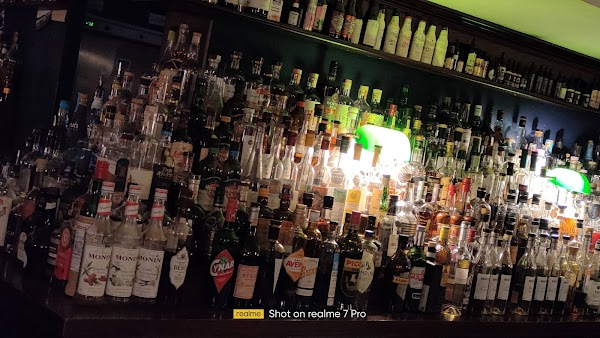
When Holborn Dining Room opened its Gin Bar in 2016, it did not do it quietly. The pitch, splashed across the London press that spring, was audacious: the largest gin collection in the capital, a copper-topped counter stocked with hundreds of gins and dozens of tonics, and, by the bar's own reckoning, more than fourteen thousand possible gin and tonic pairings. Nearly a decade later the number of bottles still runs into the hundreds, and the bar remains the definitive expression of a very British idea, that the gin and tonic, treated with real care, can be as considered as any cocktail. We rank it the second-best gin bar in the world because no room has done more to elevate the humble G and T into an art.
The setting
The Gin Bar belongs to Holborn Dining Room, the grand all-day British brasserie inside Rosewood London, a Belle Epoque hotel on High Holborn that occupies one of the city's handsomest Edwardian buildings. The restaurant is a soaring, red-leather-and-brass affair, and the Gin Bar extends its glamour with a long copper counter dedicated entirely to the spirit. In warmer months the action spills onto the hotel's courtyard terrace, one of the loveliest hidden outdoor spaces in central London, where a gin and tonic in the late afternoon sun is one of the city's quiet pleasures. It is a polished, grown-up room, the kind of place that works equally for a first date, a business drink or the start of a long evening.
Holborn Dining Room made its name as much for its food as its drink; under the chef Calum Franklin the kitchen became famous for its ornate pies before he moved on in 2021, and that same seriousness carries over into the bar. Nothing here is an afterthought. The gin program was built to be the best in London, and the room was built to match.
The gin collection
The heart of the bar is the gin book, a bound menu that reads like a reference work. At launch the collection ran to more than four hundred gins and twenty-seven branded tonics, a combination that produced the famous claim of more than fourteen thousand serves; the count has shifted over the years, as any living collection does, but it has never stopped being one of the deepest in Britain. The gins are organised by style rather than alphabetically, so you can browse by what you actually want to drink: classic juniper-forward London Drys, softer contemporary and floral gins, fruit and flavoured expressions, and a run of Dutch genevers that nod to the spirit's origins.
What raises the collection above a mere list is the pairing. Order a gin and the bar does not simply add tonic and a wedge; each spirit is matched to a specific tonic and a specific garnish chosen to draw out its botanicals, whether that means grapefruit peel and pink peppercorns, a sprig of rosemary, or a ribbon of cucumber. The result is theatre in miniature, a drink built for you rather than poured at you. The bar also keeps its own limited-edition London Dry, made in collaboration with Cornwall's Tarquin's and distilled with hand-foraged rock samphire, a fittingly coastal, juniper-led house pour.
What to drink
The obvious move, and the right one, is to put yourself in the bar's hands: describe the kind of gin you like, or the flavours you are drawn to, and let the team build a bespoke gin and tonic. It is the single best way to understand what this bar does, and it turns a familiar drink into a small revelation. For a first visit, ask them to pour something from the collection you would never buy yourself, matched to its ideal tonic.
Beyond the G and T, the classics are treated with real fluency. The menu runs through gin's canonical cocktails, the Aviation with its violet perfume, the vermouth-rich Martinez, and the Vesper, and any of them makes a fine benchmark for the room's technique. For those who want to go deeper, Holborn runs a guided gin masterclass in the bar, a roughly ninety-minute session for small groups that includes a welcome drink, a tasting of several gins with food pairings from the kitchen, and the chance to build your own cocktail. It is one of the most enjoyable ways in London to actually learn about the spirit rather than merely drink it.
Why we rank it No. 2
What sets Holborn apart from the many bars that simply hoard bottles is the seriousness of the thinking behind the collection. Depth alone is easy; depth married to genuine expertise, in a room this beautiful, is rare. The staff can navigate hundreds of gins with confidence, the pairings are considered rather than decorative, and the whole experience is delivered with the polish of a five-star hotel. It is the bar that proved the specialist gin bar could be a luxury proposition, and it set a template that rooms around the world have followed.
We place it second, behind only Atlas, because where Atlas overwhelms with scale and spectacle, Holborn persuades with craft and hospitality. It is less a monument than a master class, and for anyone who wants to understand why Britain fell back in love with gin, there is no better single room in which to do it. The claim it launched with, the largest gin collection in London, may have been a piece of marketing, but the bar has spent nearly a decade earning it.
The terrace in summer
One of the Gin Bar's best-kept secrets is the courtyard terrace it shares with Holborn Dining Room, a leafy, sheltered outdoor space hidden behind the bustle of High Holborn. In the warmer months it becomes one of the most pleasant places in central London to work through a gin and tonic, and the bar leans into the season with lighter, more refreshing serves and long, unhurried afternoons. Space is limited and word has got around, so the terrace books up fast on sunny days; it is worth planning ahead if an alfresco gin is the goal. Even in cooler weather the room itself carries the same easy glamour, all warm light and polished brass, so the bar rewards a visit in any season.
The food, and a famous kitchen
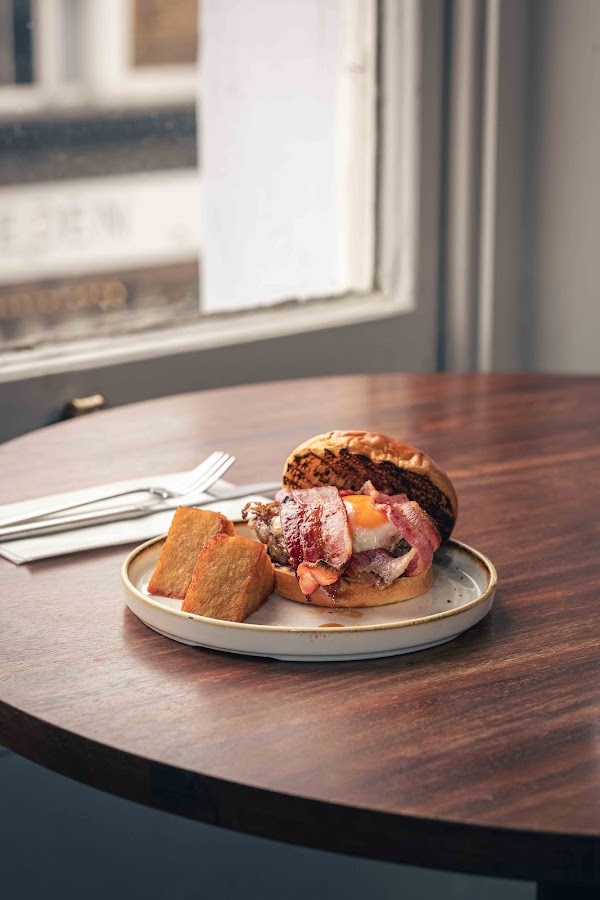
Holborn Dining Room made its reputation as much on the plate as in the glass. For years its kitchen, under the chef Calum Franklin, became a place of pilgrimage for its ornate, hand-crimped pies before he moved on in 2021, and that same craftsmanship still defines the food that arrives alongside the gin. Bar snacks and full plates from the brasserie are available to the Gin Bar, which makes it easy to turn a couple of drinks into a proper evening; a considered gin and tonic with something from the kitchen is one of the more civilised ways to spend a few hours in the middle of London. The point is that nothing here feels like an afterthought. The bar was built to be the best of its kind, and the restaurant around it operates at the same level.
The British Gin Journey
For anyone who wants to do more than drink, the bar runs a guided masterclass, sometimes called the British Gin Journey, held in the Gin Bar itself. Over roughly ninety minutes, small groups are walked through the story and the styles of the spirit: a welcome gin and tonic to begin, a guided tasting of several gins, food pairings drawn from the kitchen, and the chance to build your own gin cocktail under the bar team's eye. It is one of the most genuinely educational gin experiences in London, the kind of session that changes how you order gin forever, and it makes a memorable gift or a lively way to start a celebration. Because places are limited and the sessions are popular, they are worth booking well in advance.
Where it sits in London
London is the spiritual home of gin, and the city is thick with places to drink it, from Victorian-themed parlours to distillery bars and Empire-trade dens. What sets Holborn apart is the combination of a genuinely deep collection with the polish of a Rosewood address; it is the grand, luxurious end of the London gin spectrum, the natural counterpart to the more eccentric or clandestine rooms elsewhere in the city. On a London gin itinerary it pairs beautifully with the distilling theatre of the capital's gin-making bars and the costume-drama fun of its themed parlours, offering the version of the experience that feels most like an occasion. If you have time for only one gin bar in London, this is the one that shows the spirit at its most refined.
How to build your visit
The ideal Gin Bar evening has a shape to it. Begin by putting yourself in the bar's hands with a bespoke gin and tonic, using it to calibrate what you like. Move next to a gin you have never tried, matched to its ideal tonic, and let the staff explain why the pairing works. If you are in the mood for a cocktail, order one of the gin classics, an Aviation or a Martinez, as a benchmark of the room's technique. Add something from the kitchen, and if the weather allows, take it all out to the terrace. It is a template that turns a familiar drink into a small education, and it is exactly what this bar was built to deliver.
How to visit
The Gin Bar is at 252 High Holborn, a two-minute walk from Holborn Underground station and within easy reach of Covent Garden and the City. Because it operates within Holborn Dining Room, it keeps restaurant hours across breakfast, lunch and dinner, and booking a table through the restaurant is wise, particularly for weekend evenings and for the courtyard terrace in summer, which is deservedly popular. Prices sit at the premium end you would expect of a Rosewood address, with rare and vintage gins commanding a corresponding premium, but a well-chosen gin and tonic here is worth every penny for the education alone. Come in the late afternoon if you can, take a seat at the copper counter, and let the bar walk you through its book. Few drinks are as underestimated as the gin and tonic, and few bars make a more convincing case that it deserves your full attention.
A living archive of the gin boom
Holborn's rise mirrors gin's own. When the bar opened, Britain was deep in a gin renaissance, with new distilleries appearing almost weekly and drinkers rediscovering a spirit their grandparents had written off. The Gin Bar gathered that explosion of creativity under one roof, giving a home to hundreds of small producers who would otherwise never share a shelf with the classic houses. In doing so it became not just a bar but a kind of living archive of the modern gin boom, a place where you can taste the whole movement in an afternoon. That role, curator as much as host, is part of what makes it matter beyond London, and why gin lovers treat a visit as something close to a rite of passage.
The verdict
For all its polish, the Gin Bar never loses sight of the simple pleasure at its centre: a cold, well-built gin and tonic in a beautiful room. That is the quiet genius of the place. It could coast on its collection and its address, but instead it treats every serve as a chance to change your mind about a drink you thought you knew. Whether you come for a single, perfectly matched pour or settle in for a masterclass and a long evening on the terrace, you leave understanding gin a little better than you did. It is, for our money, the finest gin bar in Europe, and the clearest argument anywhere that the gin and tonic deserves to be taken as seriously as any cocktail on the list.