Pujol is No. 8 in our ranking of the world's best date-night bars, and it is one of the most important restaurants in the Americas. Enrique Olvera opened it in Mexico City in 2000, and over the following quarter-century it did more than almost any other kitchen to carry contemporary Mexican cuisine onto the world stage. It holds two Michelin stars, and its most famous dish, the mole madre, a mother sauce aged for thousands of days, has become one of the most recognisable plates in modern gastronomy. For a couple, Pujol offers a landmark meal steeped in history, plus one of the most romantic seats in the city at its taco omakase bar.
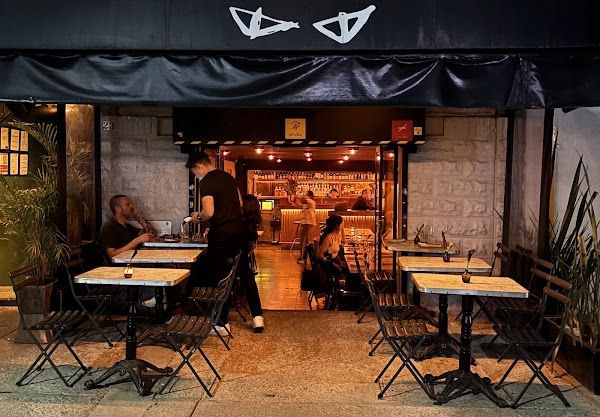
Set on a quiet street in Polanco, Mexico City's most polished district, Pujol has evolved continuously over its long life, moving premises, refining its format, and repeatedly reinventing what a fine-dining Mexican restaurant could be. Olvera has since built an international group of restaurants, but Pujol remains the mothership, the place where his ideas about Mexican ingredients, tradition and technique first took shape. It is a restaurant with genuine history, and eating here means tasting dishes that helped change how the world thinks about Mexican food.
Why Pujol ranks No. 8
Our list is ordered by verifiable merit, and Pujol holds two Michelin stars, the same rating as its Polanco neighbour Quintonil just above it. We place it one spot lower for an honest reason our method requires us to weigh: its competition standing has softened recently. After more than a decade as a fixture near the top of The World's 50 Best Restaurants, Pujol slipped out of the global top 50 in 2025, while Quintonil surged to No. 3. That trend is the tiebreak that separates the two, and we would rather state it plainly than pretend the two neighbours are interchangeable today. None of this changes what Pujol is on the plate, a genuinely great, historically important restaurant, but a ranking built on current evidence has to reflect momentum as well as legacy, and right now Quintonil's is stronger.
The room, and the taco omakase bar
Pujol's dining room is elegant and understated, with a serene, contemporary design that opens onto a courtyard, a calm, grown-up setting well suited to a special evening. But the seat we would steer couples toward is the taco omakase bar: a counter where a sequence of exquisite, single-bite tacos is served directly to you, one after another, in a format borrowed from the Japanese sushi counter and applied to Mexican masa. It is interactive, intimate and conversational, you are close to the person making your food and to the person across from you, which makes it one of the most genuinely romantic ways to eat in Mexico City. For a date, that counter is Pujol at its most engaging, turning dinner into a shared, unfolding experience rather than a formal procession.
Enrique Olvera
Enrique Olvera is the most internationally recognised Mexican chef of his generation, and Pujol is where his reputation was built. His approach, treating humble, ancestral Mexican ingredients such as corn, chillies and mole with the seriousness usually reserved for European luxury products, reframed Mexican cuisine for a global audience and inspired a wave of chefs at home and abroad. Olvera now oversees restaurants in several countries, but Pujol remains his defining work and the clearest statement of his philosophy. For diners, his significance is straightforward: a meal here is a meal at the restaurant of the chef who, more than any other, put modern Mexican fine dining on the world map.
The food: the mole madre and the milpa
Pujol's signature is the mole madre, and it is unlike anything else in dining. It arrives as two concentric circles: an outer ring of fresh mole made that day, and an inner circle of a "mother" mole that has been continuously reheated and re-fed for years, a sauce aged well past a thousand days and, by some accounts, several thousand, served simply, to be eaten with fresh tortillas. The contrast between the bright young mole and the dark, ancient one is the whole point: a single plate that tells the story of Mexican cooking through time. Around it, Pujol's tasting menus explore the milpa (the traditional Mexican cornfield) and the sea, with famous dishes such as baby corn served with a chicatana-ant mayonnaise and coffee. The cooking is refined and deeply Mexican, and the mole madre alone is worth the journey.
The drinks: agave spirits and Mexican wine
As a date-night bar in our taxonomy, Pujol earns its place partly on a drinks programme that celebrates Mexico's own traditions. Alongside a considered wine list, with a welcome emphasis on Mexico's rising regions, the bar is a strong place to explore agave spirits, from mezcal to lesser-known distillates, poured and explained by a knowledgeable team. A mezcal or agave pairing is a characterful, distinctly Mexican way to accompany the meal, and the taco omakase counter in particular lends itself to sipping something smoky between bites. For a couple, leaning into the agave side of the list turns the evening into a discovery of Mexico's drinking culture as well as its cooking, which is exactly the kind of shared exploration a great date invites.
What to order
- 01
The mole madre
The signature, a mother mole aged for thousands of days, ringed by fresh mole and tortillas.
- 02
The taco omakase bar
A counter sequence of single-bite tacos, the most romantic seat in the house.
- 03
Baby corn, chicatana mayonnaise
The iconic snack, corn with ant mayo and coffee.
- 04
A mezcal or agave pairing
Explore Mexico's agave spirits with the bar team's guidance.
Booking Pujol
Pujol remains one of the most in-demand tables in Mexico City, and reservations should be made well in advance, particularly for the taco omakase bar, which has limited seats and books up fast. Tables are released through the restaurant's website, and the most sought-after evenings go quickly, though cancellations can occasionally open last-minute space. When you book, decide in advance whether you want the main dining room's tasting menus (offered at lunch and dinner) or the taco omakase counter, as they are different experiences and seats are allocated separately. For a couple building a trip around Mexican fine dining, secure Pujol early and plan the rest of the itinerary around it, and confirm current menu formats and pricing when you reserve, as both evolve.
Making a night of it in Polanco
Pujol sits in Polanco, the same upscale, walkable district as its great rival Quintonil, which makes a two-restaurant, two-night itinerary the obvious plan for anyone serious about Mexican cuisine. The neighbourhood's leafy streets around Parque Lincoln are pleasant for a pre-dinner walk, and Polanco is dense with high-end cocktail bars and mezcalerías for a drink before or after. World-class museums such as the Museo Soumaya and Museo Jumex are close by for couples turning the meal into a longer day out. Well served by taxis and safe to explore in the evening, Polanco lets the reservation be the centrepiece of a relaxed, romantic night rather than a stop squeezed between other plans.
A note on price, value and expectation
Pujol is a two-Michelin-star landmark, and while a serious outlay, it remains far more attainable than a comparable European three-star, a tasting menu here costs a fraction of what similar experiences command in Paris or Copenhagen. That value, combined with its history and the singular mole madre, makes it a compelling special-occasion booking. Set expectations honestly, though: this is a restaurant whose competition standing has dipped even as the cooking remains excellent, so go for the history, the mole and the taco counter rather than for a current world ranking. Because formats and prices shift, confirm details when you book, and consider the agave pairing, the drinks are a genuine part of what makes an evening here feel distinctly Mexican.
How Pujol compares on our list
Pujol and Quintonil are the twin pillars of modern Mexican fine dining, and between them they give Mexico City two of the best date-night tables in the Americas. On our current-evidence method, Quintonil edges ahead at No. 7 because its World's 50 Best standing has soared while Pujol's has softened, but the two are close in quality and very different in character. Where Quintonil is calm, garden-driven and precise, Pujol is historic, mole-centred and, at its taco counter, more interactive and playful. Against the European three-stars higher on our list, Pujol offers greater value and a stronger sense of a single national cuisine. For a couple who want the more iconic, history-laden of the two Polanco giants, and that unbeatable taco omakase seat, Pujol is the pick.
The story of the mole madre
No single dish better captures Pujol's philosophy than the mole madre, and its story is part of the pleasure of eating it. A mole is a complex sauce built from dozens of ingredients, chillies, seeds, spices, chocolate, fruit, and Pujol's "mother" mole is never finished: each day a portion is served and the pot is topped up and re-cooked, so the sauce at its centre has been continuously aged for years, layer upon layer, into something impossibly deep and dark. Presented as a simple circle of aged mole inside a circle of fresh, with warm tortillas alongside, it is deliberately humble in appearance and profound in taste, a plate that argues, quietly, that time itself is an ingredient. For a couple, it is exactly the kind of dish that sparks conversation: you taste it, you talk about it, and you remember it long after the meal. It is also a neat emblem of Pujol as a whole, a restaurant that treats Mexican tradition as something living and evolving rather than fixed.
Who it's for, and when to go
Pujol suits couples drawn to history and iconography, the chance to eat a dish and at a restaurant that genuinely shaped modern cuisine, and especially those who would enjoy the interactive intimacy of the taco omakase counter. It works beautifully for a milestone, but its relative value also makes it an easy recommendation for any food-loving couple visiting Mexico City. The city's mild, high-altitude climate means there is no bad season to go, and a lunch booking can be both easier to secure and a lovely way to see Polanco by day. Whenever you visit, give the meal a full evening, lean into the agave list, and treat the reservation as the fixed point around which the rest of your day in the city is planned.
A restaurant with global reach
Part of what keeps Pujol relevant a quarter-century on is Enrique Olvera's expanding influence beyond Mexico City. His restaurant group now spans several countries, and Pujol itself periodically takes its cooking on the road through international residencies that let diners elsewhere taste a version of what it does. But the flagship in Polanco remains the original and the definitive experience, the room where the mole madre was born and where Olvera's ideas are at their most complete. For a couple, that reach is a reason to eat at the source: this is the restaurant that launched everything else, still serving the dishes that made its name.
Our verdict
Pujol earns its No. 8 place on merit you can check: two Michelin stars, more than a decade among the world's most celebrated restaurants, and in the mole madre one of the most iconic dishes in modern gastronomy. Earlier versions of this site attached an identical, invented rating to every entry; we have removed those and replaced them with the real, verifiable honours Pujol has earned, including the honest note that its competition standing has softened recently, because a ranking built on evidence should say so. Book it for a landmark night in Mexico City, take the taco omakase counter if you can, order the mole madre, and explore the agave list, few restaurants anywhere carry this much history so deliciously.
For more of the city, see our full guide to date-night bars in Mexico City, browse the wider Mexico City bar guide, or return to the complete 25 best date-night bars in the world, where Pujol sits at No. 8.