The Village Vanguard is not a cocktail bar, and it has never pretended to be. It is the oldest continuously operating jazz club in New York, and for 90 years the entire room has been organised around one thing: the band on the stand. Buy tickets ahead, arrive early, and understand what you are walking into, there are two sets a night and no bad seats, only close ones and closer ones.
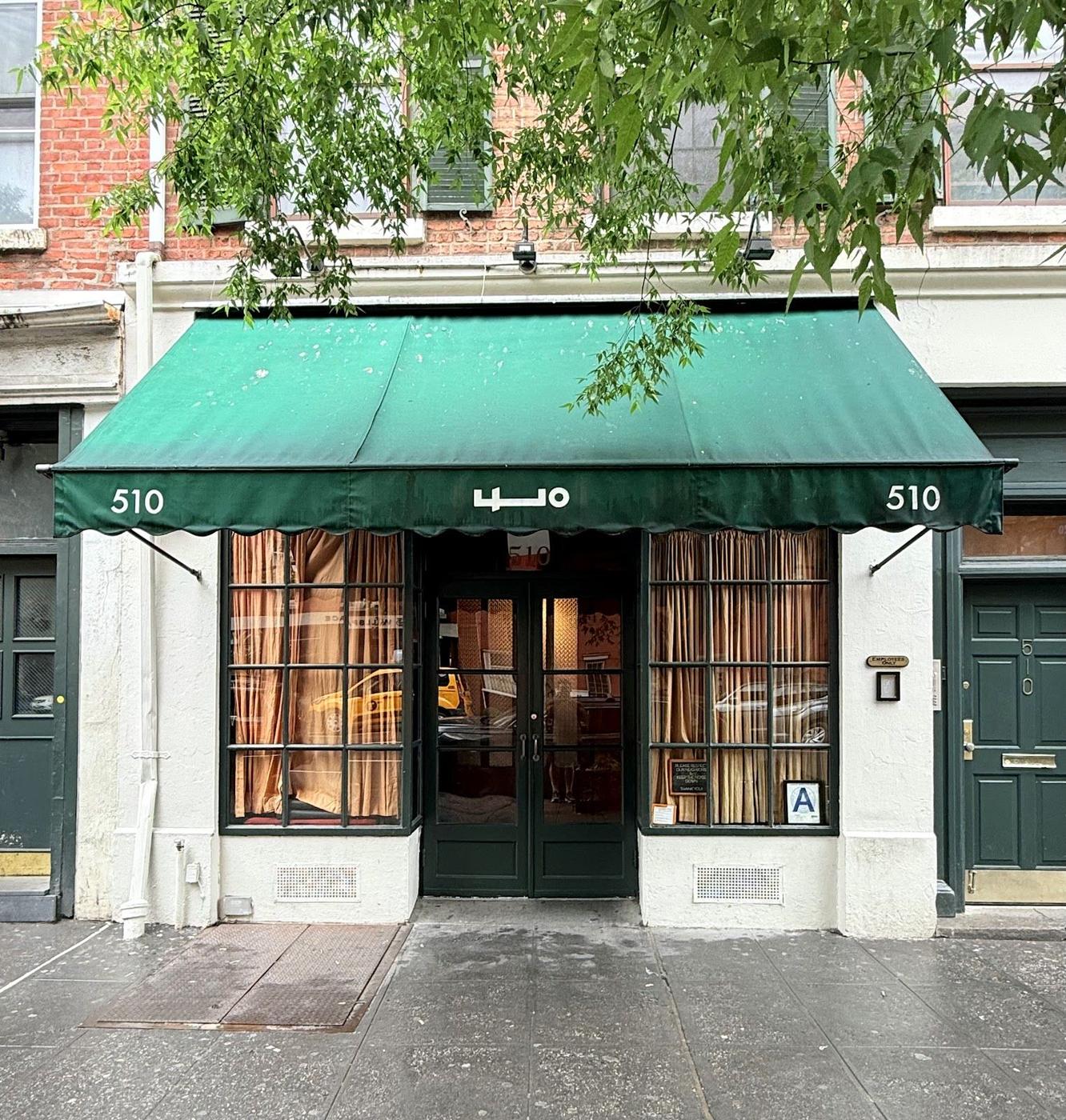
Down about fifteen steep steps from Seventh Avenue South, below a small awning that has changed little in decades, the Vanguard opens into a wedge of a room with red walls, a low ceiling and photographs of the musicians who have made it the most storied address in jazz. It seats roughly 123 people. There is no VIP section, no bottle service, no menu of small plates. What there is, instead, is a stage that has carried John Coltrane, Sonny Rollins, Bill Evans, Thelonious Monk, Charles Mingus and hundreds of others, and a sound, warm and close, that recording engineers have spent seventy years trying to bottle. That is why it sits at number one in our ranking of the world's best live music bars.
Ninety years below Seventh Avenue
The club was opened by Max Gordon, a Lithuanian-born immigrant who first tried a Village Vanguard in 1934 on a nearby street before moving the name into a former speakeasy, the Golden Triangle, at 178 Seventh Avenue South. That second, permanent Vanguard opened on 22 February 1935, and it has been running ever since. Gordon's requirements for the space were famously modest: in his memoir he wrote that he needed a spot with "two johns, two exits, two hundred feet away from a church or synagogue or school, and with the rent under $100 a month." The triangular footprint that gives the room its unusual acoustics is a literal inheritance from that speakeasy's "Golden Triangle" shape.
For its first two decades the Vanguard was not strictly a jazz club at all. Through the 1930s and 1940s Gordon programmed beat and bohemian poetry readings, folk singers, calypso and blues; the marquee only tipped decisively toward jazz around 1957. The Sunday afternoon jam sessions of the early years became legendary, Lorraine Gordon, Max's wife, later recalled that you could "go hear Lester Young, Ben Webster, all the greatest jazz musicians for fifty cents at the door." When Max died in 1989, Lorraine ran the club with the same fierce standards until her own death in 2018. It remains family-operated today, one of the last independent institutions of its kind in a city that has lost most of them.
The most-recorded room in jazz
No single fact explains the Vanguard's stature better than its discography. The phrase "Live at the Village Vanguard" is itself a genre. Sonny Rollins cut A Night at the Village Vanguard here on 3 November 1957, a pianoless trio date that became foundational to hard bop. Bill Evans, who treated the room as a second home, recorded Sunday at the Village Vanguard and Waltz for Debby on 25 June 1961, only days before his bassist Scott LaFaro died in a car crash; those sessions are among the most revered in the piano-trio canon. John Coltrane recorded "Live" at the Village Vanguard the same year. The list runs on through Dexter Gordon's Homecoming (1976), Joe Henderson's The State of the Tenor (1985), a seven-disc Wynton Marsalis set in 1999, and Cécile McLorin Salvant's Dreams and Daggers, which won the 2018 Grammy for Best Jazz Vocal Album.
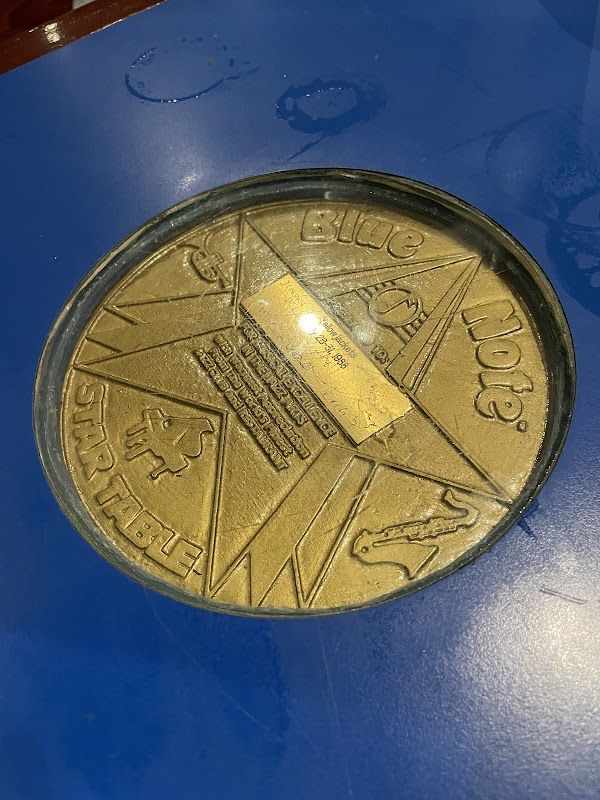
That recorded legacy is not just prestige; it is commerce. The Blue Note label president once told the Wall Street Journal that "the words 'Live at the Village Vanguard' do have a direct and positive influence on an album's sales," and the label's catalogue holds more than a dozen titles recorded in the basement. For a room the size of a large apartment, that is an astonishing cultural output. When you sit here, you are sitting inside an instrument that engineers understand as intimately as any Steinway.
The Monday night that never ends
One residency deserves its own paragraph. Since 1966, the big band now known as the Vanguard Jazz Orchestra, founded as the Thad Jones/Mel Lewis Orchestra, has played the club almost every Monday night. It is one of the longest continuous residencies in the history of the music, a standing appointment that has outlasted its founders and much of the New York scene around it. If you want to understand what the Vanguard is, go on a Monday: seventeen musicians folded impossibly into a corner of a basement, playing charts that have been polished for nearly sixty years, in front of a crowd that treats the whole thing as a rite rather than a show.
Why we rank it No. 1
Our live music ranking is built on a single organising question: how central is the band to the room? By that measure nothing outranks the Vanguard. It is uncompromising in ways that would be commercial suicide for a modern bar. No food is served, "not even a peanut," as the club's own lore has it, and outside food is banned outright. There is a one-drink minimum per person, but the drink can be a soda, a juice or a bottle of water; nobody is here to sell you a signature cocktail, and there is no signature cocktail to sell. Every design decision, from the seating to the acoustics to the two-set nightly schedule, serves the music and only the music.
That purity is the whole point. Plenty of venues on our list are more comfortable, better for a date, or easier to get a table at. Some, like Nightjar in London, pour genuinely world-class drinks alongside their live jazz. But a ranking of live music has to reward the rooms where the performance is the entire reason the doors open, and here, for ninety years, it has been. The Vanguard is the standard the rest of the list is measured against.
Getting in: what to actually expect
The Vanguard runs two shows nightly, typically at 8:00pm and 10:00pm, with seating opening at 7:00pm for the first set and around 9:30pm for the second. Admission is paid in advance through the club's ticketing page rather than by phone or email, and there are no assigned seats: it is first come, first served, so the earlier you arrive within your ticketed set, the closer you sit. Online sales generally close about an hour before showtime, and a standby line forms 30 to 45 minutes before the doors. The minimum age is 15. There is no wheelchair access down the stairs, which is worth knowing before you plan a visit.
Practically, that means the ideal Vanguard evening looks like this: book the set you want a few days ahead, arrive when seating opens, take a seat as near the stage as you can, order your one drink, and then, this is the unwritten rule of the room, be quiet and listen. The Vanguard crowd polices talkers gently but firmly. This is a listening room in the truest sense, and the reward for the etiquette is an intimacy with the music that larger venues simply cannot offer.
Drinks, food and money
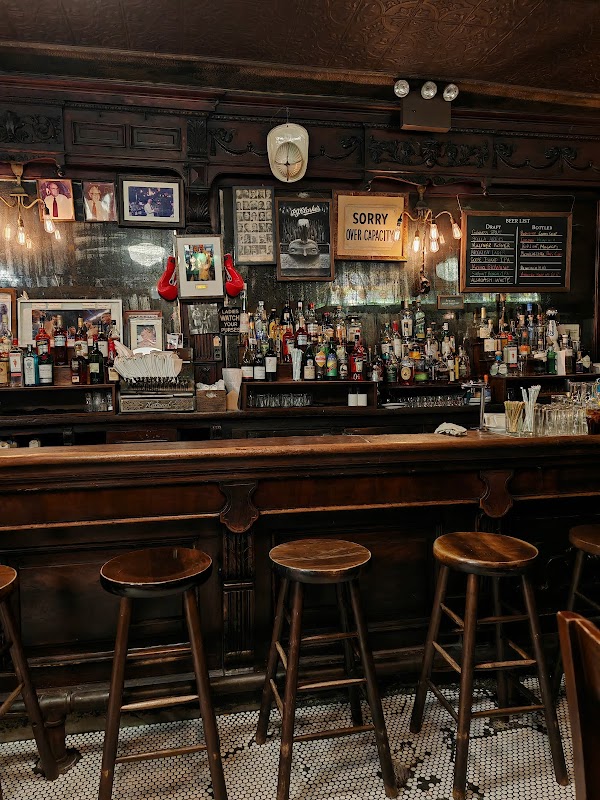
Let us be precise, because earlier versions of this very page were not: the Village Vanguard does not have a celebrated cocktail programme, a house single malt, or a kitchen. It has a small bar that exists to satisfy the one-drink minimum and to keep the room lubricated between numbers. Order a beer, a glass of wine, a whiskey or a soft drink, keep it simple, and spend your attention on the stage. The real "cost" of the Vanguard is the door charge plus that minimum; by the standards of a Manhattan night out it is a genuine bargain for the calibre of what you are hearing, which is why we price it at $$$ rather than higher. You are paying for music, not garnish.
Who it's for
The Vanguard is for anyone who takes live music seriously enough to sit still for it, jazz obsessives, certainly, but also newcomers who want to understand what the fuss is about in the best possible setting. It is a superb, if intense, date for two people who would rather share a profound hour than shout over a DJ. It is a pilgrimage for visiting musicians. It is not the right room for a rowdy group night, a business blowout, or anyone looking for a scene; there are better places in the city for all of those. Come for the music, and come ready to give it your full attention.
If you are building a New York jazz itinerary, pair it with the Blue Note Jazz Club (No. 5 on our list) and Birdland for a fuller picture of the city's living jazz culture. Our complete Live Music Bars in New York guide has more, and the New York Bar Guide covers every other occasion.
The records to hear before you go
Half the pleasure of a Vanguard visit is arriving having already heard the room on record, then recognising its dimensions the moment you sit down. Start with Sonny Rollins' A Night at the Village Vanguard, cut here in November 1957, a pianoless trio date that shows off Rollins' fearless harmonic imagination and remains a landmark of the era. Move to Bill Evans, whose Sunday at the Village Vanguard and Waltz for Debby were both recorded on 25 June 1961; the interplay between Evans, bassist Scott LaFaro and drummer Paul Motian is among the most influential in the history of the piano trio, and unbearably poignant given LaFaro's death days later. John Coltrane's "Live" at the Village Vanguard comes from the same year, a document of his restless early-sixties quartet.
From there the discography keeps giving: Dexter Gordon's Homecoming (1976), recorded on his triumphant return to the United States; Joe Henderson's The State of the Tenor (1985); Wynton Marsalis's seven-disc Live at the Village Vanguard (1999); and, more recently, Cécile McLorin Salvant's Dreams and Daggers, which won the 2018 Grammy for Best Jazz Vocal Album. Hearing any of these first turns a visit into a kind of recognition, you are sitting inside a sound you already know.
Finding it, and the neighbourhood
The Vanguard is on Seventh Avenue South just below West 11th Street, in the heart of the West Village, one of Manhattan's most walkable and atmospheric neighbourhoods. The nearest subway is Christopher Street–Sheridan Square on the 1 line, a short walk away, with the West 4th Street station (A, C, E, B, D, F, M) also within easy reach. The surrounding streets are full of good places to eat and drink before or after a set, which matters, because the Vanguard itself offers only that one drink and no food, you'll want dinner elsewhere. Come with a plan to make an evening of the wider Village around your set time.
Frequently asked
Do I need a ticket? Yes, buy in advance through the club's ticketing page; there are no assigned seats, so earlier arrival within your set means a closer seat. Is there food? No, none at all, and outside food is not allowed; there is a one-drink minimum, which can be a soft drink or water. How early should I arrive? When seating opens (7pm for the first set, around 9:30pm for the second) if you want to sit near the stage. Is there an age limit? Yes, 15 and over. Is it accessible? No, entry is down about fifteen steep steps with no wheelchair access. Is it worth it? For anyone who cares about jazz, unreservedly; there is no more storied room in the music.
The verdict
The Village Vanguard is the closest thing live music has to a sacred site, a small, stubborn, family-run basement that has refused to become anything other than what it is. Ninety years on, it still books the best musicians in the world, still records the results, and still asks nothing of you except that you listen. That is why it is number one, and it is hard to imagine what would ever move it.
What to order
- 01
A simple beer or glass of wine
The bar is functional, not the point, keep it uncomplicated and save your focus for the stage.
- 02
A neat whiskey
The classic listening-room pour; nurse it through a set.
- 03
Sparkling or still water
Fulfils the one-drink minimum with no fuss, nobody here will blink.
Sources
Village Vanguard official site and FAQ (villagevanguard.com); Max Gordon, Live at the Village Vanguard (memoir); Wall Street Journal reporting on the club's recording legacy; label discographies for Blue Note, Riverside and ECM; Grammy Awards records (2018). Historical details cross-checked against multiple published accounts. Set times and policies were current at the time of writing and can change, confirm with the venue before visiting.