Ai Tre Scalini is the kind of place the Italian aperitivo was invented for: a warm, cramped wine counter in Rome's most bohemian quarter where you order a glass of something honest and a board of cured meat and cheese, and let the working day dissolve into the evening. A bottiglieria on Via Panisperna since 1895, its vine-draped facade is one of the defining images of Monti, and behind it is one of the most reliable after-work rooms in Rome.
First, a clarification, because the name is shared: this is Ai Tre Scalini, the historic wine bar at Via Panisperna 251 in the rione Monti, not the famous Tre Scalini café on Piazza Navona known for its tartufo gelato. They are entirely different places. Ai Tre Scalini trades under the full name "Ai Tre Scalini, Bottiglieria dal 1895," and its own homepage carries a motto that tells you exactly what sort of establishment it is: «Morire sì, ma non di sete!», "To die, yes, but not of thirst."
A bottiglieria since 1895
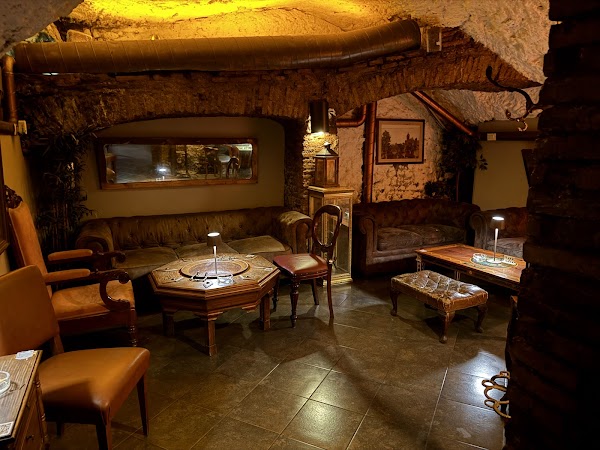
The venue's documents trace it back at least to 1895, and it has operated as a bottiglieria, an old-Roman wine shop-cum-bar, ever since, which makes it one of the city's genuine historic drinking rooms. (A small translation note worth flagging, because English guides get it wrong: some render its origins as "founded in the 800," a garbled version of the Italian l'Ottocento, the 1800s. Read it as nineteenth-century roots, a bottiglieria since 1895, never the year 800.) The building itself is part of the appeal. Its facade is framed by a great American vine that drapes across Via Panisperna and colours the sloping street green through the seasons; inside, early-twentieth-century paintings on wood, the work of painters who once decorated the neighbourhood's churches, have been deliberately preserved by the current owners.
Those owners, Barbara and Adriano, have run the place for roughly two decades, and their light touch is the reason it still feels like itself. They kept the historic room intact while gradually widening the offer: where the bottiglieria once served only cold plates, cured meats, cheeses, bread to go with the wine, it now adds hot dishes of Roman cooking and a selection of natural-wine labels alongside the classics. It is an update in the right spirit, extending the place without modernising away its soul.
The format: wine by the glass, at the counter
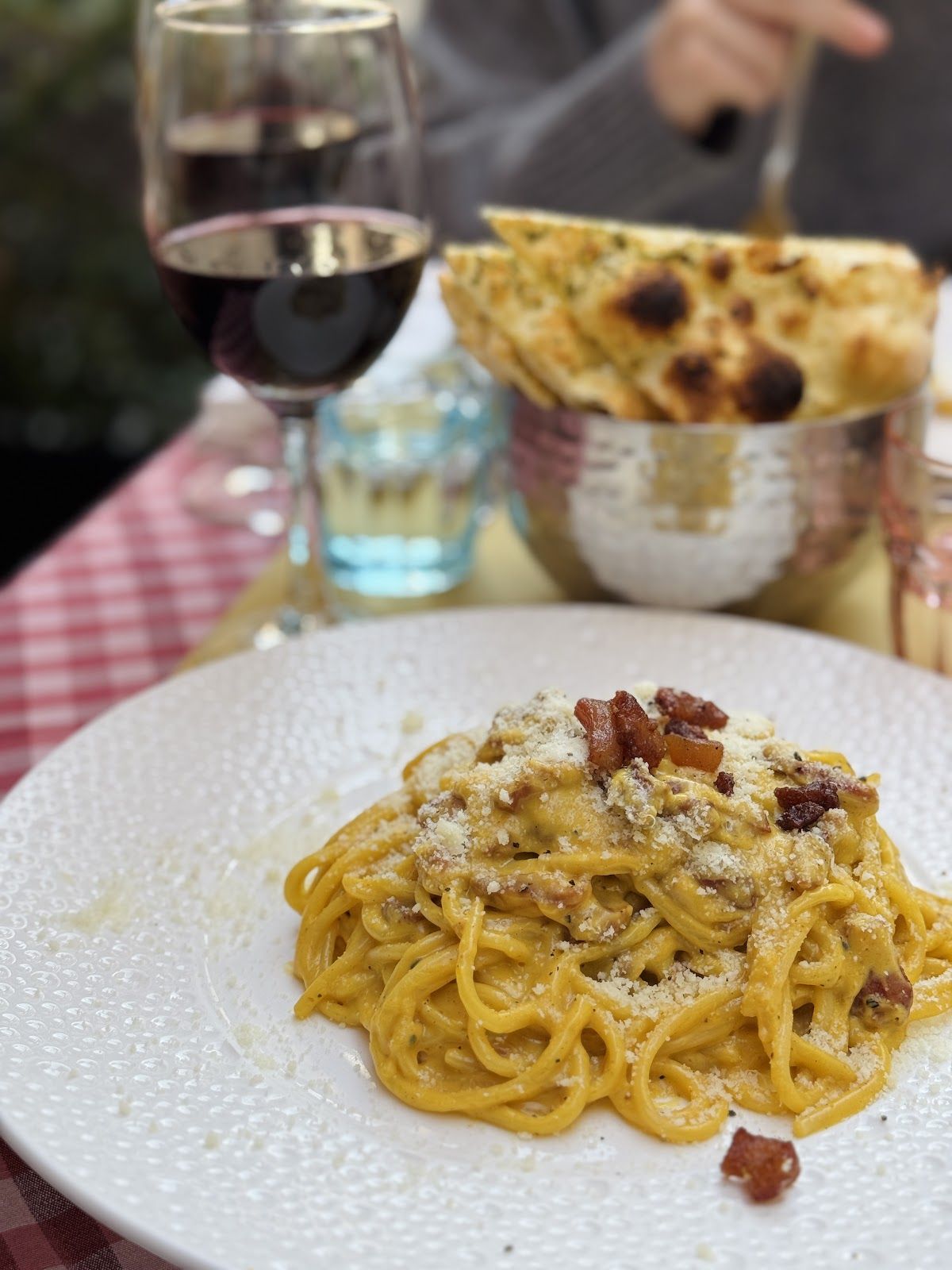
What Ai Tre Scalini does, it does simply. Wine is poured by the glass at the counter, every day, "for all budgets," with the day's specials chalked up and changed as bottles come and go. The list runs to around a hundred labels, essentially all Italian and drawn from across the country's regions, and it has a reputation for being good value and refreshingly unintimidating, this is not a place that makes you feel you should have studied first. Beyond wine there is Menabrea beer and a range of spirits, but the glass of Italian red or white at the bar is the reason to come. To eat, there are boards of salumi and cheese, capocollo, mortadella, salame, buffalo mozzarella, small ricottas, aged Roman pecorino served with honey, plus bruschette and, since the kitchen expanded, first courses like cacio e pepe and ravioli, meatballs and salads. You do not need to over-order; a glass and a board is the whole idea.
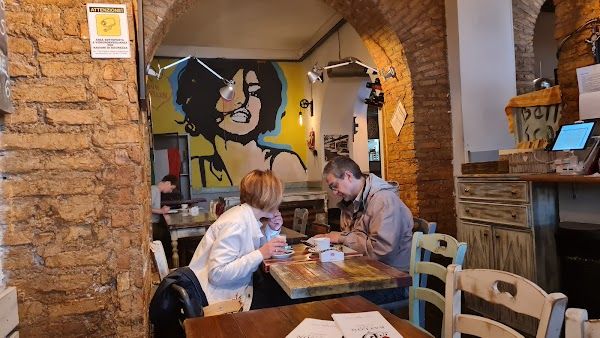
The room matches the format. It is small and wood-lined, warm and informal, with a soundtrack that drifts from jazz to Roman stornelli, the city's old folk songs. It is habitually packed and pleasantly noisy, and on a good evening the crowd, a mix of Romans and locals from the rione alongside visitors "in search of the truth of Rome, served in a glass," as the bar's own copy has it, spills out of the door and onto the cobbles. Because it takes no reservations, the local wisdom is to arrive early, before about half past seven, if you want to actually sit down; later, you drink standing, which is arguably the more authentic way to do it anyway.
Monti: Rome's oldest, most bohemian quarter
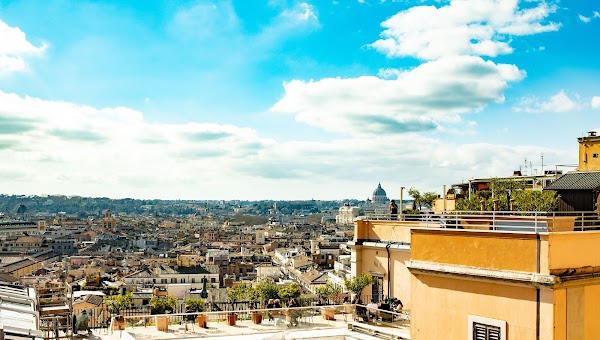
Half of what makes Ai Tre Scalini such a good after-work bar is where it sits. Monti is Rome's first rione, the oldest administrative district in the city, occupying the ground of the ancient Suburra, in antiquity one of Rome's most crowded, working-class neighbourhoods. Today it is the city's bohemian quarter: a warren of cobbled lanes, independent boutiques, artisan workshops and wine bars tucked between the Colosseum and Termini, just off Via Nazionale and a short walk from the Cavour metro. It is exactly the kind of dense, walkable, lived-in neighbourhood where after-work drinking flourishes, and Ai Tre Scalini is one of its anchors, the wine counter the neighbourhood uses, not a destination people visit once.
Via Panisperna itself carries a famous piece of scientific history. In the 1920s and 30s a group of brilliant young physicists led by Enrico Fermi, remembered as the "Ragazzi di Via Panisperna," the Via Panisperna boys, worked at the Royal Physics Institute further up the same street, at number 90, where their work on slow neutrons helped earn Fermi the 1938 Nobel Prize. It is an atmospheric association rather than a literal one: the institute was up the road, not in the bar, and there is no record that the physicists drank at Ai Tre Scalini. But the shared street and rione give the place a sense of standing in a deep current of Roman life, which is part of its charm. A glass at the counter here comes with a couple of thousand years of neighbourhood behind it, and the Colosseum a few minutes' walk away.
The bar's own motto, «Morire sì, ma non di sete!», "To die, yes, but not of thirst", is a small window onto its character. It is the joke of a place that takes its wine seriously and itself lightly, and that has been keeping Romans watered, unpretentiously, for well over a century. There is no attempt here to be a "concept," no reinvention every season; the offer is essentially what it has always been, a good glass and something to eat with it, refined rather than reinvented by each generation that has held the keys. In a city drowning in restaurants that chase trends, that steadiness is its own kind of luxury, and it is a big part of why locals treat Ai Tre Scalini as a fixture rather than a night out.
The aperitivo, the Monti way
The Italian aperitivo is easy to caricature, spritzes and a buffet of snacks, but at its root it is simply the civilised ritual of a drink and something small to eat that bridges the end of work and the start of the evening. Ai Tre Scalini is the unshowy, authentic version of that ritual. There is no elaborate cocktail list and no buffet; there is a glass of Lazio or Italian wine and a board of local cured meat and cheese, taken standing at a counter or crammed at a small table, in a room full of people doing exactly the same thing. This is the aperitivo as Romans actually practise it in a neighbourhood they love, and it is a large part of why the bar reads as such a complete after-work spot rather than a tourist performance.
The current owners have widened what the kitchen does, adding hot Roman plates and a few natural-wine labels to the old repertoire of cold cuts and cheese, but they have kept the essential proposition intact. You can treat Ai Tre Scalini as a quick glass on the way home, a long grazing session over several boards, or the anchor of a whole evening in Monti, and it accommodates all three without fuss. The wine list stays deliberately approachable, around a hundred Italian labels chosen for drinking rather than showing off, and the by-the-glass prices have long been part of the appeal: this is a place where a second and third glass never feels like a decision.
The room, the vine and the street
The physical charm of Ai Tre Scalini is inseparable from its ranking. The facade, draped in the great American vine that arches across Via Panisperna, is one of the most photographed frontages in Monti, and the interior lives up to it: a small, warm, wood-lined room hung with early-twentieth-century paintings on wood, the work of artists who once decorated the quarter's churches, deliberately preserved by the owners. A soundtrack drifts from jazz to Roman stornelli, and the whole space runs warm and loud and close. Because it takes no reservations and fills fast, the crowd routinely overflows the door and settles onto the sloping cobbles outside, glasses in hand, which is not a flaw but the point. The street becomes part of the bar, and the bar becomes part of the street, in the way the best neighbourhood drinking rooms always do.
All of it sits on top of an unusually deep sense of place. Monti is the ancient Suburra, Rome's oldest rione, and Via Panisperna carries its own famous history in the "Ragazzi di Via Panisperna," Enrico Fermi's young physicists, who worked up the street at number 90 in the 1920s and 30s. Ai Tre Scalini makes no false claim on that story, the institute was up the road, not in the bar, but a glass at this counter genuinely comes with two thousand years of neighbourhood layered beneath it, from the crowded quarters of antiquity to the bohemian Monti of today. That is a kind of atmosphere no new bar can manufacture, and it is exactly what an after-work drink in Rome should feel like.
When to go, and what to order
Ai Tre Scalini runs continuously from around midday until roughly midnight, every day, though exact hours vary by source and season, so it works equally as a lunch stop, a proper aperitivo and a long evening. The sweet spot for the after-work crowd is the early evening, from about six, when the Monti aperitivo hour gets going and the counter fills. Order a glass of whatever the bartender recommends from the chalkboard, trusting the counter is always the move here, and a mixed board of salumi and cheese to go with it; add a plate of pasta if you are making a night of it. Do not come looking for cocktails or a signature drink; the pleasure is Italian wine, poured honestly, in a room that has been doing exactly this since the nineteenth century.
It earns its place near the top of our after-work ranking because it marries genuine heritage with total everyday usability. It asks nothing of you but that you turn up thirsty, and it gives back the essential Roman evening: good wine, good cured meat, warm noise and a bohemian street outside the door. For more of the city, see our Rome after-work list, which also includes the connoisseur wine bar Il Goccetto across the centro storico, and the full Rome bar guide.
What to order
- 01
A glass from the chalkboard
Italian wine by the glass, trust the counter's pick.
- 02
Tagliere di salumi e formaggi
A board of Roman cured meats and cheese with honey.
- 03
Bruschette
Simple Roman toasts to go with the wine.
- 04
A natural-wine label
From the small selection the current owners added.
Sources: Ai Tre Scalini official site; Turismo Roma; info.roma.it (historic Roman shops); Romeing. "1895" and the Monti/Via Panisperna history verified against these; opening hours vary by source (given as roughly midday to midnight) and prices are omitted as they change.