The local view
Craft beer in Stockholm, properly explained
Beer stronger than 3.5 percent leaves Swedish shop shelves at 8pm on weekdays, 3pm on Saturdays, and never appears on Sundays, because only Systembolaget, the state retail monopoly founded in 1955, may sell it. After the shutters drop, the tap list is the only game in town. No other rule shapes drinking in Stockholm so completely.
The upside is a bar culture that carries real weight. Omnipollo, founded in 2010 by brewer Henok Fentie and artist Karl Grandin, spent its first decade brewing on other people's kit before installing tanks in an old Stockholm church. Its beer and pizza pub Omnipollos Hatt has anchored the Slussen end of Södermalm since 2015.
Bigger players noticed too. Nya Carnegiebryggeriet opened in Hammarby Sjöstad in 2014 as a joint venture between Carlsberg and Brooklyn Brewery, and Danish cult brewer Mikkeller keeps a bar on Södermalm. Even Gothenburg's Stigbergets crossed the country to open a Stockholm outpost.
This guide covers where the pours actually justify capital city prices: which districts deliver, which T-bana stops to use, and how to drink around the monopoly's clock.
Södermalm and SoFo
One island holds most of what matters. Omnipollos Hatt has poured the brewery's own beer alongside pizza since 2015, a short walk from Slussen T-bana, and the Friday crowd tells you the locals never tired of it. In SoFo, the blocks south of Folkungagatan where the island shops and eats, Katarina Ölcafé keeps its taps pointedly Swedish.
Akkurat, by Mariatorget T-bana, belongs on any serious drinker's itinerary. Visit Stockholm rates it among the best beer bars in the world, and a cellar of roughly 500 aged bottles plus a lambic list documented on Lambic.info backs the billing. Its affiliated pub Oliver Twist pours nearby, so the two make a natural pair.
Mikkeller's Stockholm bar sits on the island too, and across the water in Hammarby Sjöstad, Nya Carnegiebryggeriet has brewed since 2014 under Carlsberg and Brooklyn Brewery ownership. Slussen, Medborgarplatsen and Mariatorget stations cover the crawl. You could spend an entire trip here and miss nothing essential.
Hornstull and western Södermalm
The island's western tip drinks younger and looser. PangPang, which brews out in the southern suburb of Hökarängen, runs its bar in Hornstull, and Stigbergets fot brings Gothenburg's hop-forward output to the same pocket of the city. Hornstull T-bana on the red line drops you in the middle of it.
Sunday afternoons work well here. With Systembolaget closed all day, the bars around Hornstull do the job the shops cannot.
Kungsholmen
Kungsholmen drinks like a neighbourhood rather than a destination, which has its own appeal. BrewDog's Stockholm bar operates near Fridhemsplan T-bana with the Scottish chain's dependable tap wall, and Mackinlays Inn pours close by. Come here to drink where people actually live, then cross back south when you want fireworks.
Gamla Stan
The old town photographs better than it pours. Zum Franziskaner has run its beer cellar since 1910 and pairs German cooking with a solid list, and the Bishops Arms chain keeps a branch among the alleys. Honest verdict: come for history with your half litre, not for a modern Swedish tap list.
The fix is painless. Gamla Stan T-bana sits one stop from Slussen, so a medieval detour costs you fifteen minutes, not the evening.
Vasastan and the Norrmalm border
Vasastan is thin on destination craft bars, and pretending otherwise helps nobody. The strength on this side of town is imports: Internationella Pressklubben near Norra Bantorget stocks around 800 mostly Belgian beers, and the Flying Dog pours in the same corner of the city. The Bishops Arms on Vasagatan mops up anyone stranded near Central Station.
In summer the calculation changes. Walk east to Humlegården, where Omnipollos Flora has run a biergarten-style outdoor bar since 2019, and the north side of town suddenly earns its place on the itinerary.
What makes a great craft beer bar in Stockholm
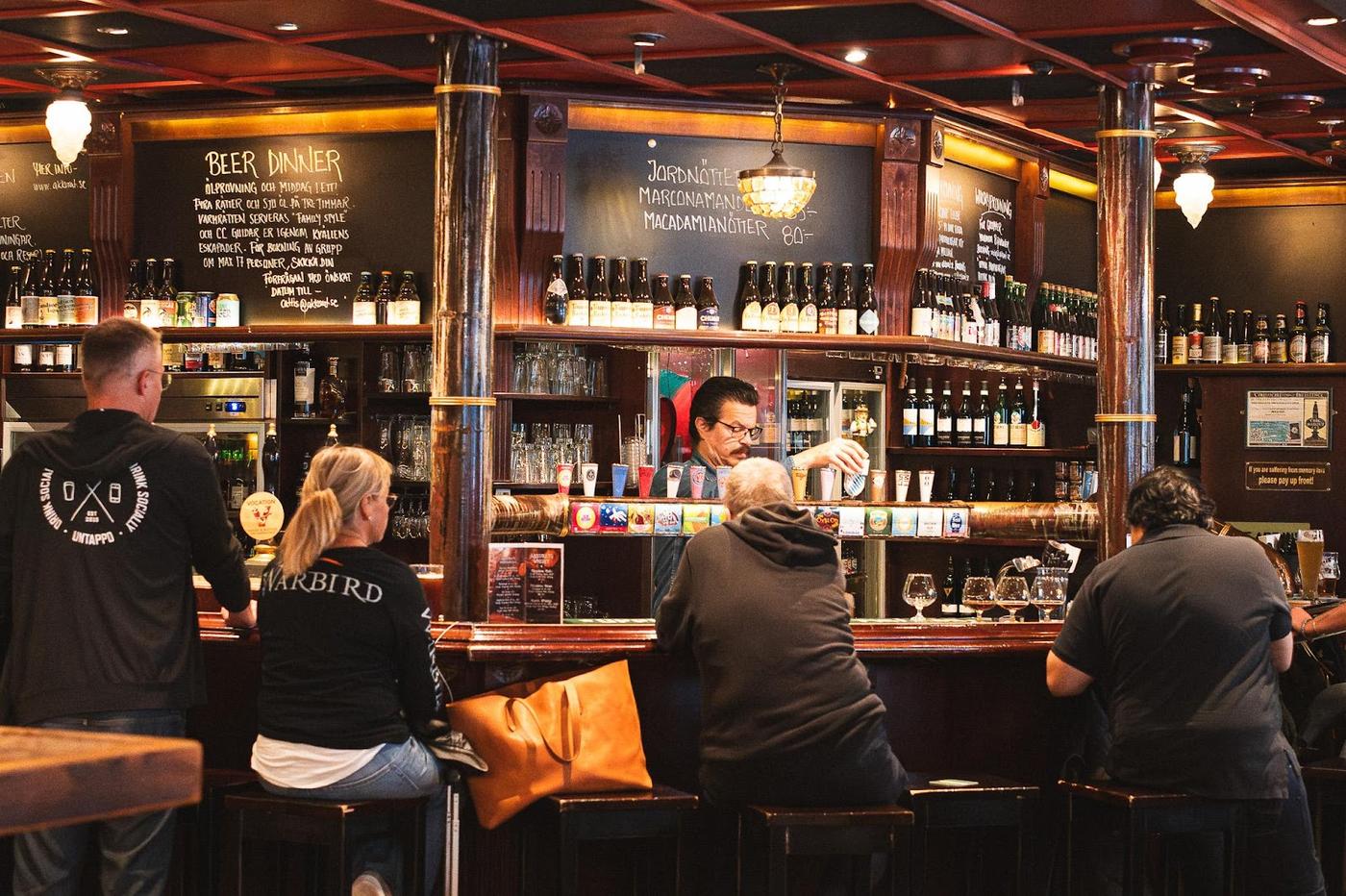
Rotation first. Because Systembolaget controls every takeaway sale above 3.5 percent, and closes early, a bar's tap list is many drinkers' only access to new releases, and the good rooms treat that as a responsibility. Look for boards that change weekly and staff who know which Omnipollo or PangPang keg arrived that morning.
Depth counts as much as novelty. Akkurat's cellar of some 500 aged bottles shows what a Stockholm bar looks like at full stretch, and Pressklubben's 800-strong Belgian list proves the import tradition here predates the craft boom. A great bar offers both a fresh Swedish IPA and something that has been waiting years for you.
Swedish taps are the tell. A serious room pours Stockholm Brewing Co's organic beers, something from PangPang's Hökarängen tanks, or a Stigbergets guest line alongside the international names. If every handle belongs to a multinational, keep walking.
Finally, the room itself has to earn winter. Stockholm's drinking year splits between short terrace months and long dark ones, so the best bars work as places you happily sit for three hours, not just tap walls with stools. Omnipollos Hatt manages it with pizza and noise; Akkurat manages it with carpet and a cellar list. Both approaches beat a cold bench.
Planning your night
Learn the monopoly's clock before anything else. Systembolaget shuts at 8pm on weekdays, 3pm on Saturdays, and stays closed all Sunday and on public holidays, so Sunday drinking in Stockholm happens in bars or not at all. Bars serve from age 18, while the monopoly's stores hold the line at 20.
The T-bana makes a multi-stop night simple. Slussen, Medborgarplatsen and Mariatorget line up for a Södermalm crawl, Hornstull adds a western leg on the red line, and Fridhemsplan covers Kungsholmen. Gamla Stan sits a single stop from Slussen if you want a historic cellar between rounds.
Terrace culture is real but short. Uteserveringar, the outdoor seating that appears across the city in spring, carry Stockholm through summer, and Omnipollos Flora in Humlegården is built entirely around that window. In winter the scene moves indoors and the small rooms fill early.
Book ahead when food is part of the plan. Omnipollos Hatt runs on pizza and Nya Carnegiebryggeriet operates as a full brewpub restaurant, so weekend tables at either reward a reservation. For the smaller bars, arrive early on Friday and Saturday evenings; a weekday visit buys you the same taps with space to breathe.
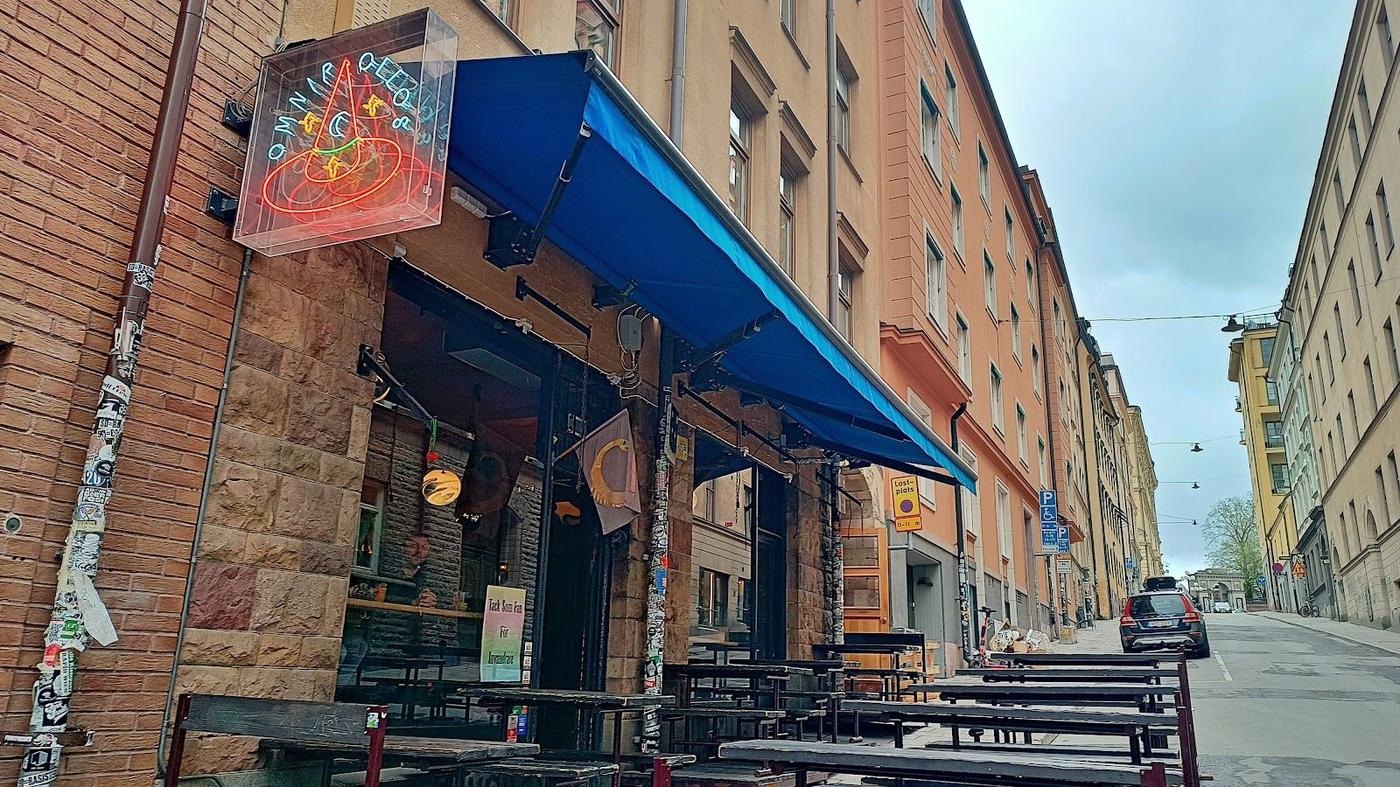
Södermalm settles the argument. Base yourself between Slussen and Mariatorget and you can hit Omnipollos Hatt and Akkurat, two rooms with genuine international standing, in one evening on foot. Add Hornstull for PangPang and Stigbergets fot and you have the whole arc of modern Swedish brewing inside three T-bana stops.
Skip Gamla Stan unless a beer cellar from 1910 tempts you, and treat Kungsholmen as a local's detour. Remember the clock above all: once Systembolaget's doors shut, the bars are the only place the good beer lives. That scarcity is the point. Few cities make a pint feel this earned.