Tokyo

The 10 Best Craft Beer Bars in Tokyo

Tokyo's craft-beer scene runs deeper than the tourist taps. These ten are where locals drink. The craft beer bars on this list span every neighbourhood worth a trip, the central districts all show up, and every price tier from a $5 local pour to a $25 hotel-bar tasting. Each bar earns its spot for a different reason.

  1. 01

    2nd Floor Sports Bar

    ROPPONGI · $$ · SPORTS BARS

    2nd Floor Sports Bar draws a steady local crowd in Roppongi. Booking is recommended on weekends. Walk-ins are usually possible early in the evening. Order: the bar's house signature. Best time: Tuesday and Wednesday before 9pm, when the regulars haven't filled the room yet. Best for match days and group bookings. Saturday after 10pm gets crowded, book ahead or arrive early.

  2. 02

    Baird Beer Harajuku Taproom

    HARAJUKU · $$ · COCKTAIL BARS

    Baird Beer Harajuku Taproom draws a steady local crowd in Harajuku. Booking is recommended on weekends. Walk-ins are usually possible early in the evening. Order: the bar's house signature. Best time: any weeknight between 7pm and 9pm, when the bar settles into its rhythm and the bartender has time to talk. Best for cocktail-curious drinkers who want technique without theatre. Friday from 8pm fills up; reserve a counter seat or a high table.

  3. 03

    Bar Asterisk

    AOYAMA · $$$$ · COCKTAIL BARS

    Bar Asterisk draws a steady local crowd in Aoyama. Booking is recommended on weekends. Walk-ins are usually possible early in the evening. Order: the bar's house signature. Best time: Sunday from 6pm, when it's the room's quietest premium night and the kitchen is unhurried. Best for cocktail-curious drinkers who want technique without theatre. Avoid post-match nights if the local team is playing, the upstairs gets loud.

  4. 04

    Bar BenFiddich

    SHINJUKU · $$$$ · COCKTAIL BARS

    Bar BenFiddich draws a steady local crowd in Shinjuku. Booking is recommended on weekends. Walk-ins are usually possible early in the evening. Order: the bar's house signature. Best time: Thursday late or Friday early, when you'll catch the room building toward its weekend tempo. Best for cocktail-curious drinkers who want technique without theatre. First-Friday traffic in the district can mean a 20-minute wait at the door.

  5. 05

    Bar Buena Vista Social Club

    EBISU · $$ · COCKTAIL BARS

    Bar Buena Vista Social Club draws a steady local crowd in Ebisu. Booking is recommended on weekends. Walk-ins are usually possible early in the evening. Order: the bar's house signature. Best time: Tuesday and Wednesday before 9pm, when the regulars haven't filled the room yet. Best for cocktail-curious drinkers who want technique without theatre. Saturday after 10pm gets crowded, book ahead or arrive early.

  6. 06

    Bar Cordon Noir Tokyo

    THE CENTRE · $$$$ · COCKTAIL BARS

    Bar Cordon Noir is a small second-floor Ginza cocktail bar with a serious focus on French aperitifs and Italian amari. The back bar holds around 200 unusual Eur. Order: the bar's house signature. Best time: any weeknight between 7pm and 9pm, when the bar settles into its rhythm and the bartender has time to talk. Best for cocktail-curious drinkers who want technique without theatre. Friday from 8pm fills up; reserve a counter seat or a high table.

  7. 07

    Bar de Ronde Tokyo

    THE CENTRE · $$$$ · COCKTAIL BARS

    Bar de Ronde has been operating in an Akasaka basement for decades and is one of the heritage Tokyo cocktail bars. The room is preserved mid-century, leather b. Order: the bar's house signature. Best time: Sunday from 6pm, when it's the room's quietest premium night and the kitchen is unhurried. Best for cocktail-curious drinkers who want technique without theatre. Avoid post-match nights if the local team is playing, the upstairs gets loud.

  8. 08

    Bar Gen Yamamoto

    AZABU-JUBAN · $$$$ · COCKTAIL BARS

    Bar Gen Yamamoto draws a steady local crowd in Azabu-Juban. Booking is recommended on weekends. Walk-ins are usually possible early in the evening. Order: the bar's house signature. Best time: Thursday late or Friday early, when you'll catch the room building toward its weekend tempo. Best for cocktail-curious drinkers who want technique without theatre. First-Friday traffic in the district can mean a 20-minute wait at the door.

  9. 09

    Bar Goldfinger Tokyo

    GINZA. THE ROOM IS THEMED AROUND BOND, BLACK LEATHER · $$$$ · COCKTAIL BARS

    Bar Goldfinger is a tiny second-floor whisky bar in Ginza. The room is themed around Bond, black leather, vintage posters, low gold lighting, and the back bar. Order: the bar's house signature. Best time: Tuesday and Wednesday before 9pm, when the regulars haven't filled the room yet. Best for cocktail-curious drinkers who want technique without theatre. Saturday after 10pm gets crowded, book ahead or arrive early.

  10. 10

    Bar High Five Tokyo

    THE CENTRE · $$$$ · COCKTAIL BARS

    Bar High Five sits on the fourth floor of an unremarkable Ginza building. The room itself is small, about 14 seats around a curved zinc bar, but Hidetsugu Uen. Order: the bar's house signature. Best time: any weeknight between 7pm and 9pm, when the bar settles into its rhythm and the bartender has time to talk. Best for cocktail-curious drinkers who want technique without theatre. Friday from 8pm fills up; reserve a counter seat or a high table.

  11. 11

    Shinshu Osake Mura

    SHIMBASHI · $ · CRAFT BEER

    Shinshu Osake Mura pours sake, shochu and craft beer from Nagano a few minutes from Shimbashi Station. Prices run low, with some pours under 300 yen, and bottles sell to take home. The room closes by 8:30pm, so regulars arrive straight after work. Best for a cheap standing round of regional Japanese drinks.

  12. 12

    Spring Valley Brewery

    DAIKANYAMA · $$ · CRAFT BEER

    Spring Valley Brewery runs Kirin's craft brewpub on Log Road Daikanyama, brewing on site since 2015. A 2024 renovation added a counter built around beer and food pairings poured by certified staff. Six core beers anchor the taps beside seasonal one-offs. Best for a relaxed flight close to Daikanyama Station.

Use this guide either as a single curated route through Tokyo or as a checklist to revisit over a long weekend. Reservations are flagged where they matter. Otherwise, walk in. Below: the ten craft beer bars that any serious drinker in Tokyo would tell you to put on the list.

2nd Floor Sports Bar draws a steady local crowd in Roppongi. Booking is recommended on weekends. Walk-ins are usually possible early in the evening. Order: the bar's house signature. Best time: Tuesday and Wednesday before 9pm, when the regulars haven't filled the room yet. Best for match days and group bookings. Saturday after 10pm gets crowded, book ahead or arrive early.

Baird Beer Harajuku Taproom draws a steady local crowd in Harajuku. Booking is recommended on weekends. Walk-ins are usually possible early in the evening. Order: the bar's house signature. Best time: any weeknight between 7pm and 9pm, when the bar settles into its rhythm and the bartender has time to talk. Best for cocktail-curious drinkers who want technique without theatre. Friday from 8pm fills up; reserve a counter seat or a high table.

The local view

Craft beer in Tokyo, properly explained

In 1994 Japan's Ministry of Finance dropped the minimum output for a brewing licence from two million litres a year to sixty thousand. Small producers became legal overnight, and the country named the result ji-biru, local beer, after the jizake of the sake trade. Every taproom on this page exists because of that tax revision.

The first act ended badly. Hundreds of breweries opened, quality lagged, and well over a hundred had folded by the late 1990s. Survivors such as Niigata's Echigo, the February 1995 pioneer, spent the following decade rebuilding trust before Japan relearned the word craft.

Tokyo brews comparatively little of this beer but sells most of it. Baird Beer runs a taproom in Harajuku, Kirin operates the Spring Valley brewpub in Daikanyama, and Shimbashi's standing bars pour prefectural rarities for commuters in a hurry.

This page ranks the venues. The essay below maps the districts, the etiquette and the last-train mathematics, so read it before you commit your one free evening.
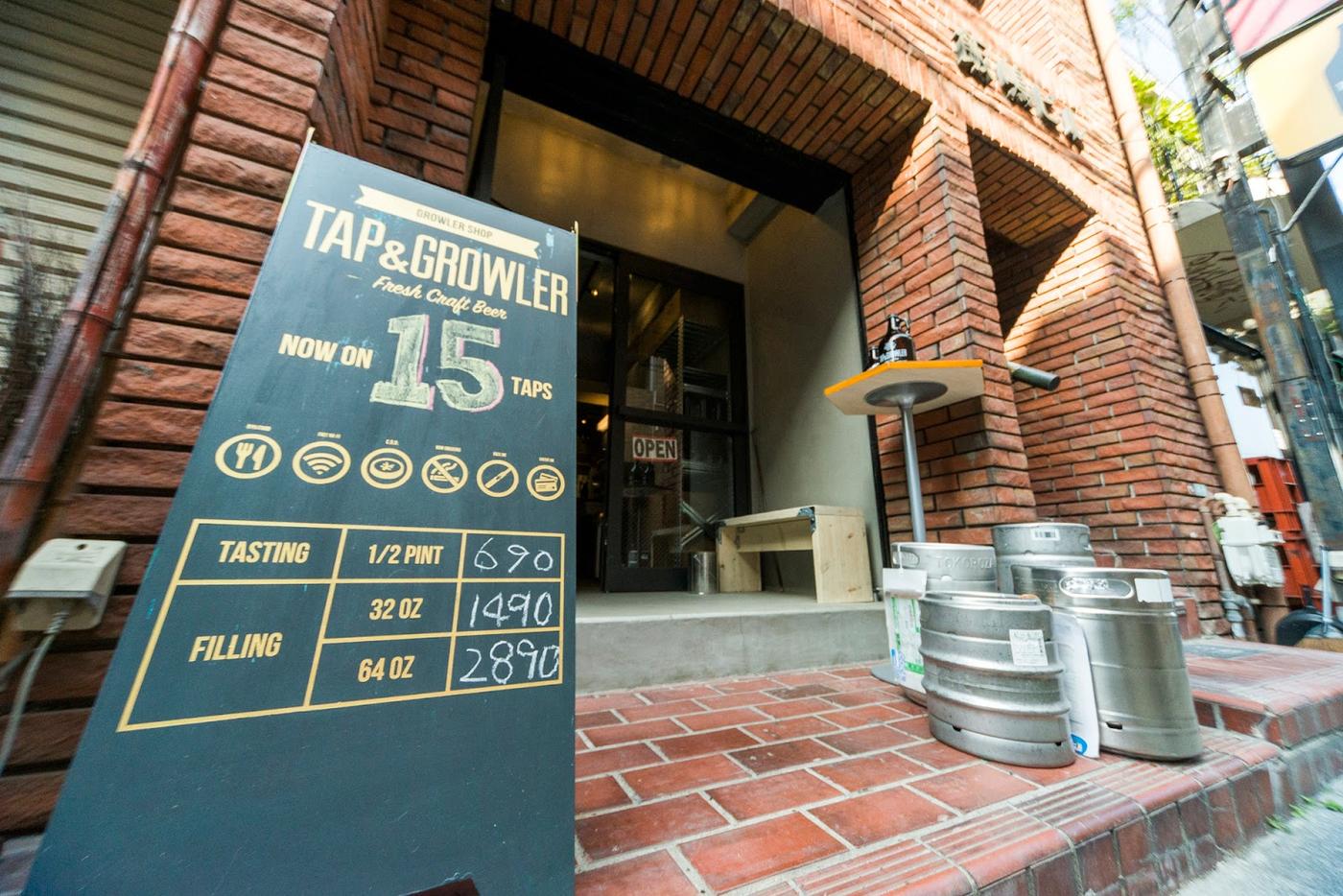
Bartender pouring craft beer from a row of taps
Regional taps outnumber Tokyo-brewed ones in most of the city's best rooms.

Harajuku and Shibuya

Harajuku is teenage fashion at street level and beer one floor up. Baird Beer, the independent brewer that started out in Numazu, Shizuoka, runs its Harajuku Taproom here, an izakaya-style room where the house range pours alongside charcoal-grilled yakitori. It sits a short walk from JR Harajuku Station on the Yamanote line, with Meiji-jingumae on the Chiyoda and Fukutoshin lines closer still.

The pleasure is the contrast. You file past crepe stands and vintage shops, climb a staircase, and land in a wooden room that smells of chicken skin and hop resin. Shibuya, one stop south on the Yamanote, supplies the late-night density once the taproom evening winds down.

Daikanyama, Ebisu and Naka-Meguro

Daikanyama holds the corporate money, spent well for once. Spring Valley Brewery Tokyo is Kirin's craft flagship, opened in 2015 on Log Road, a strip of timber buildings laid along the route of the old above-ground Toyoko line tracks. The brewing kit sits in view of the dining room, which makes it the rare big-company project that shows its workings.

Ebisu, one JR Yamanote stop away or a ten-minute walk, is a Tokyo district literally named after a beer. Sapporo's predecessor began brewing Yebisu there in 1890, the station built to ship the beer took the brand's name, and in 2024 the company restarted brewing on the site with Yebisu Brewery Tokyo. Drink here and you are standing inside the industry's origin story.

Naka-Meguro, next along the Tokyu Toyoko line and the end of the Hibiya line, adds canal-side drinking at a gentler pace. String the three together and you have the city's most walkable beer corridor.

Shimbashi and the standing bars

Shimbashi is where the office towers empty, and its drinking culture is built for speed. The tachinomi, the standing bar, strips the night to a counter, no stools and a short bill. Shinshu Osake Mura is the model of the genre: a shop-like standing bar near Shimbashi Station pouring beer and sake from Nagano Prefecture at prices that read like misprints.

This is where regional ji-biru actually gets drunk, by commuters moving between the JR gates and the Ginza line. Arrive before the after-work wave or accept elbow contact as part of the format.

Shinjuku, assessed honestly

Shinjuku has volume, and Golden Gai has fame, but neither amounts to a craft beer destination. Golden Gai's alleys hold rows of very small bars, many seating fewer than ten, and most trade in whisky, shochu and conversation rather than rotating taps. Several add a cover charge, and regulars come first.

Treat it as postwar architecture with a drink attached, then look elsewhere in the ward for taps. Shinjuku Station's rail spread, JR, Metro and private lines together, makes the district an easy first or last stop rather than the main event.
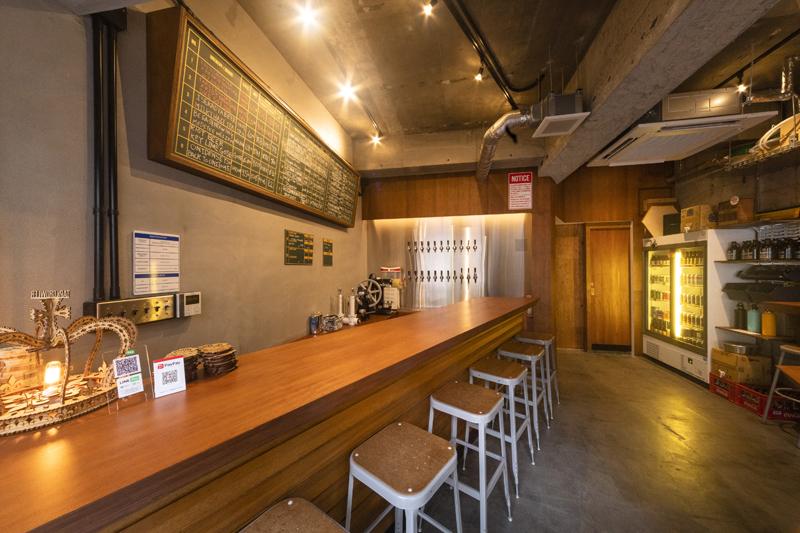
Glasses of beer lined up on a wooden bar counter
Ji-biru grew up: the souvenir beers of the 1990s became a serious national category.

What makes a great craft beer bar in Tokyo

Range means geography here. A serious Tokyo tap list reads like a rail map of Japan: Ibaraki's Kiuchi, a sake house since 1823 whose Hitachino Nest owl arrived in 1996, Nagano's Yo-Ho with its Yona Yona Ale, Niigata's Echigo from the first post-deregulation wave. If every handle pours an American import, the bar has skipped the interesting half of the story, the part written in prefectural breweries since 1994.

Scale matters as much as selection. Many of the best rooms hold twenty people or fewer, and the person pouring usually chose the lineup personally.

Ask what is pouring that they cannot get again; the answer tells you in one sentence whether the list is curated or simply wholesaled. A blackboard that changes weekly beats a laminated menu every time.

Food is the third test. The izakaya instinct runs deep in this city, so the strongest beer bars pair their pours with proper cooking rather than a bowl of rice crackers. Baird's yakitori-and-ale formula in Harajuku is the template plenty of rooms quietly follow.

Finally, watch how a bar treats the solo drinker. Tokyo drinks alone without embarrassment, and a counter seat, a well-kept pale ale and no small talk unless invited is the local baseline of hospitality.

Planning your night

Start earlier than feels natural. Office crowds hit the bars from six on weeknights, small taprooms fill soon after, and the whole evening runs against the clock because most train lines stop around midnight to shortly after. That deadline shapes everything, including why so many locals drink near their transfer station rather than their office.

Miss the final departure and the taxi across town will cost more than the beer did.

Budget for the otoshi at seated bars: a small compulsory snack that works as a seat charge and appears on the bill unasked. Standing tachinomi bars generally skip it, which is one reason Shimbashi drinking stays so cheap. Neither practice is a scam; both are the local operating system.

Book where booking exists. A brewpub the size of Spring Valley Brewery can absorb a group, but many of the city's best beer rooms hold a dozen people and promise nothing. Solo or in pairs you can almost always squeeze in; five of you cannot.

Seasonally, summer brings rooftop beer gardens across the city, along with the sticky heat that justifies them. Winter thins the crowds considerably, which is the quiet argument for a January crawl with your pick of the counter seats.
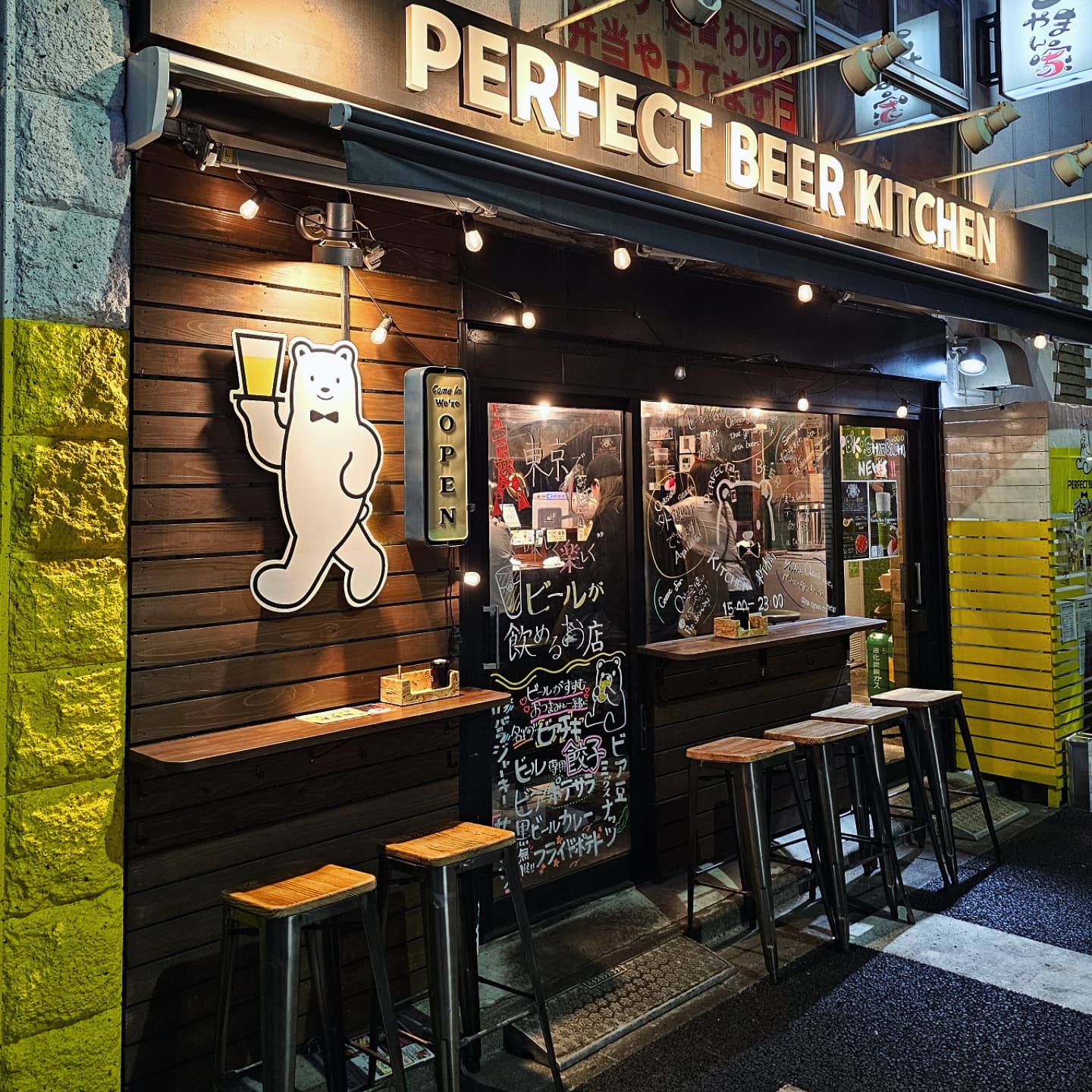
Small bar interior lit at night with drinkers at counter
Small rooms and early last trains mean Tokyo beer nights run on a timetable.

Tokyo's beer scene is a national distribution network wearing a bar scene as a disguise, and that is its charm. The breweries live in Shizuoka, Ibaraki, Nagano and Niigata; the capital's job is to pour them well, often in rooms smaller than your kitchen.

Do the Daikanyama-to-Ebisu walk once for the history, give Baird's Harajuku Taproom a yakitori evening, and finish standing in Shimbashi where the beer costs least and means most. Skip Golden Gai for taps, keep one eye on the clock, and come back in January when the counters are yours.

Good to know

Craft beer in Tokyo: your questions

Where can I find the best craft beer near me in Tokyo?

Aim for one of four clusters. Harajuku and Shibuya give you taproom drinking with the city at full volume, the Daikanyama, Ebisu and Naka-Meguro corridor runs from brewpub to canal-side in a half-hour walk, Shimbashi does cheap standing-bar pours of regional beer, and Shinjuku works as a late fallback.

The ranked list above sorts the venues themselves. For a location-based shortlist wherever you are standing, use our near-me finder and cross-reference it with the district notes on this page.

What is the best Tokyo area for a taproom crawl?

Daikanyama to Ebisu, extended to Naka-Meguro if your legs hold. Start at Spring Valley Brewery on Log Road, where Kirin brews in sight of the tables, then walk ten minutes to Ebisu, the district that took its name from Yebisu beer and regained a working brewery in 2024.

Finish one Hibiya line stop away by the Naka-Meguro canal. Everything sits on foot or a single station apart, which matters in a city where the night ends at the last train rather than last orders.

Which Japanese craft breweries should I look for on tap lists?

Four names anchor any credible list. Baird Beer, the Shizuoka independent behind the Harajuku Taproom; Kiuchi Brewery, the 1823 sake house from Ibaraki whose Hitachino Nest owl went global; Yo-Ho Brewing of Nagano, maker of the ubiquitous Yona Yona Ale; and Echigo of Niigata, first through the door in 1995 after deregulation.

Spot two or more of these on a menu and the bar has its history straight. Our craft beer guides cover the wider field city by city.

What beer styles does Japan do best?

Precision styles. Japanese brewers grew up on immaculate pale lager, so their pilsners and session beers arrive cleaner than most of what gets exported anywhere. Wheat and white ales are a national strength, with Hitachino Nest White Ale the famous case, and everyday pale ales like Yona Yona set the domestic standard.

Look too for one-off brews using local citrus such as yuzu. Huge imperial stouts and triple IPAs exist here, but restraint is the home game and the reason to play it.

When do Tokyo craft beer bars get busy, and should I book?

Friday from six is the crush, when office parties collide with tiny floor plans. Standing bars like Shinshu Osake Mura take no bookings and run on churn, most small taprooms seat first come first served, and only brewpub-scale venues such as Spring Valley Brewery reliably hold tables for groups.

If you are more than three people, reserve whatever can be reserved and go early for the rest. Midweek evenings and the January lull are the connoisseur's windows.

Is Golden Gai worth visiting for craft beer?

As a beer destination, no; as twenty minutes of surviving postwar Tokyo, absolutely. The alleys hold rows of bars the size of wardrobes, most pouring whisky, shochu and conversation rather than craft taps, and several add a cover charge with regulars taking precedence.

Have one drink for the atmosphere, then ride the Yamanote line towards Harajuku or Ebisu, where the taps actually are. More district-by-district detail sits in our Tokyo guides.

Think we missed one?

Submit a bar

Keep exploring

More of Tokyo

Looking beyond Tokyo? See our guide to the best craft beer bars worldwide, or compare craft beer bars city by city. Or find craft beer bars near you.

More cities

Craft Beer bars in other cities