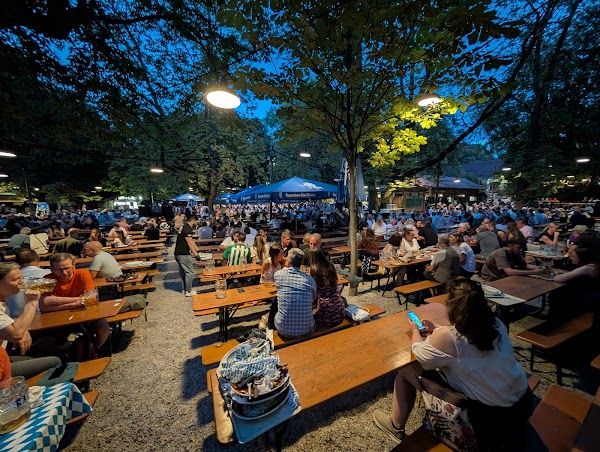
If the Augustiner-Keller is the great beer garden, the Augustiner-Grossgaststätten is the great beer palace: a soaring, ornate hall in the very heart of Munich's old town, where the same revered beer is poured in surroundings of vaulted ceilings and old-world grandeur. It is the city's most atmospheric room in which to drink a Helles.
Why the Grossgaststätten is our No. 13
This is the second Augustiner venue on our world craft beer ranking, and it is here for the same fundamental reason as the first: Augustiner is one of the world's great beer institutions, and where you drink its beer matters. The Grossgaststätten, the brewery's grand flagship restaurant on the Neuhauser Strasse pedestrian zone, is one of the most beautiful and historic beer halls in a city full of them, and it puts a reference-standard lager in a genuinely spectacular setting.
It ranks thirteenth, just below the Keller, for one simple reason of preference rather than quality: the beer is identical and equally superb, but the open-air, cask-poured ritual of the beer garden is, for us, the more essential Augustiner experience. That is a fine distinction between two excellent rooms. The Grossgaststätten is the one to choose when you want grandeur, weather-proof comfort and the theatre of a great indoor hall, and on those terms it is close to unbeatable.
The same extraordinary beer
The beer here comes from the same remarkable source as at the Keller: Augustiner-Bräu, founded in 1328, Munich's oldest brewery and the only one of its big breweries to have stayed independent of international corporate ownership, majority-held since 1996 by a charitable foundation. That independence, and the brewery's famous refusal to chase fashion or advertise aggressively, is why Münchners regard Augustiner as the connoisseur's choice, and why its beer is worth drinking wherever you find it.
What the Grossgaststätten offers is that beer indoors, year-round, in style. The Augustiner Lagerbier Hell, widely considered the benchmark Munich Helles, and the stronger Edelstoff are poured here in the traditional one-litre Mass, alongside the full range of classic Bavarian cooking. You are drinking one of the world's great lagers in one of its most handsome rooms, which is a combination few places on earth can offer. And because it is a working restaurant in the middle of the city rather than a seasonal garden, you can count on it whatever the weather or the month.
A beer palace in the old town
The Grossgaststätten, the name means, roughly, "grand restaurant establishment", lives up to it. This is a large, ornate, multi-room hall of the kind that Munich built in its confident heyday, all high vaulted and decorated ceilings, dark wood, and the warm, buzzing atmosphere of a place that has been feeding and watering the city for generations. Where a modern taproom is stripped-back and industrial, this is the opposite: a temple to the idea that drinking beer can be a grand civic occasion.
That sense of theatre is central to its appeal. Walking in from the busy pedestrian street into the soaring interior, finding a table among the panelled rooms, and settling in with a Mass of Helles is an experience with real ceremony to it. It is the kind of room that makes an ordinary weekday beer feel like an event, and it captures the confident, traditional grandeur of Munich beer culture better than almost anywhere indoors. The hum of the crowd bounces off the high ceilings, the light is warm and golden, and for an hour or two the rush of the modern shopping street outside might as well not exist.
Hall or garden? Why it sits just below the Keller
Munich gives beer lovers a happy dilemma, and the choice between the Grossgaststätten and the Augustiner-Keller is the clearest example. Both pour the same beer to the same high standard, so the decision comes down to what kind of experience you want. The Keller is trees, gravel, communal benches and, in summer, Edelstoff drawn straight from a wooden cask, the great open-air ritual of the Munich beer garden. The Grossgaststätten is vaulted rooms, waiters and the grandeur of a historic hall.
For a beer traveller chasing the most quintessential Augustiner moment, the cask-poured garden just edges it, which is why we place the Keller a notch higher. But that is a matter of preference between two of the best beer venues in the world, not a judgement on quality. In poor weather, in winter, or simply when you want the splendour of the indoor hall, the Grossgaststätten is the better choice, and it is every bit as worthy of a place on this list.
Neuhauser Strasse and the setting
The Grossgaststätten sits on Neuhauser Strasse, the busy pedestrian shopping street that runs through the heart of Munich's old town between Karlsplatz (Stachus) and Marienplatz. That location could not be more central: you are steps from the city's main landmarks, and the hall makes a perfect refuge from a day of sightseeing. Unlike the beer gardens on the city's edges, this is a venue you can drop into in the middle of exploring the Altstadt, which makes it one of the most convenient of Munich's great beer institutions.
For visitors, that accessibility is a real virtue. You do not need to plan a special trip; the Grossgaststätten is simply there, in the thick of the old town, ready to turn a break from sightseeing into a proper encounter with Munich beer. Combined with the nearby monastery beer of Andechser am Dom and the great garden of the Keller, it completes a picture of the classical, lager-centred greatness that makes Munich one of the essential beer cities on earth.
The Bavarian table
A great Munich beer hall is as much about food as beer, and the Grossgaststätten takes both seriously. The kitchen runs the full canon of Bavarian cooking, roast pork with dumplings and dark beer gravy, crackling-topped pork knuckle, Weisswurst with sweet mustard and a pretzel, Obatzda cheese, and the seasonal specialities that mark the Munich year. This is hearty, generous, traditional food, built over generations to go with lager, and eating it here is part of the experience rather than an afterthought.
That marriage of food and beer is central to why Munich's halls endure. The Helles cuts through the richness of the pork; the food gives the beer somewhere to go across a long, sociable meal. In the grand rooms of the Grossgaststätten, with a Mass in hand and a plate of something roasted in front of you, you are taking part in a way of eating and drinking that has barely changed in a century, and that consistency is exactly the point.
History you can drink
There is a particular pleasure in drinking beer with this much history behind it. The recipe in your glass descends from a brewing tradition documented since 1328; the room around you belongs to the confident era when Munich built grand public halls to match its civic pride; and the whole ritual, the litre Mass, the communal tables, the aproned waiters, has been handed down largely intact. Few drinks anywhere connect you so directly to centuries of continuity.
That continuity is not an accident but a choice. Augustiner could have modernised, diversified and marketed itself into something bigger and blander, as so many old breweries did; instead it stayed independent and stayed the course, and venues like the Grossgaststätten are the reward. To drink here is to benefit from that stubbornness, to taste, in an ordinary glass of Helles, the result of a brewery deciding, again and again, not to change what already works.
One brewery, three ways to drink it
For a beer traveller, the Grossgaststätten is best understood as one point of a triangle. Augustiner offers three great ways to drink its beer in the city: the grand indoor hall of the Grossgaststätten, the vast outdoor garden of the Keller, and the more basic, brewery-attached Bräustuben, where the Helles pours from wooden casks in a plainer, workmanlike room. Each has its own character, and a dedicated visitor could happily spend an evening in each and never tire of the beer.
Choosing between them is really about mood and weather. Come to the Grossgaststätten when you want splendour and shelter in the heart of the old town; head to the Keller when the sun is out and the garden calls; seek out the Bräustuben when you want the unvarnished, local version closest to the source. That a single brewery can offer three such distinct and excellent experiences is itself a mark of how deeply Augustiner is woven into the life of Munich.
Who it is for
The Grossgaststätten is for anyone who wants the grandeur of a great Munich beer hall with the reliability of the city's most revered beer, which is to say, almost everyone. It suits sightseers wanting a central, weather-proof stop; groups and families looking for a big, welcoming room and hearty food; and lager lovers who simply want a benchmark Helles in beautiful surroundings. Solo travellers are comfortable here too, since a communal-minded beer hall never leaves anyone feeling out of place. It is warm, traditional and open to all. The only visitor who might prefer elsewhere is the one specifically after the open-air, cask-poured beer-garden ritual, for that, the Keller awaits, or the drinker hunting experimental modern craft, which this proudly is not.
The verdict
We rank Augustiner-Grossgaststätten thirteenth in the world because it delivers one of beer's great pleasures: a reference-standard lager, from Munich's oldest independent brewery, poured in one of the most beautiful beer halls in Europe, right in the heart of the old town. It sits just below its sibling the Keller only because the beer-garden ritual edges the indoor one, a distinction between two superb rooms, not a real gap in quality. For grandeur, heritage and a perfect Helles under a vaulted ceiling, it belongs among the world's best, and on a cold or rainy day in Munich, there is no finer place in the city to drink. It is living proof that grandeur, heritage and a perfectly poured glass of Helles were always meant to belong together. Explore more with our Munich craft beer guide and Munich bar guide.
What to order
- 01
Augustiner Lagerbier Hell
The benchmark Munich Helles, order a one-litre Mass.
$$ - 02
Augustiner Edelstoff
The stronger premium pale lager; a touch more body.
$$ - 03
Roast pork & dumplings
Classic Bavarian fare, built for these beers.
$$ - 04
Weisswurst & a pretzel
The traditional Munich pairing, ideally before noon.
$$
Augustiner-Grossgaststätten FAQ
What is Augustiner-Grossgaststätten?
The grand flagship beer hall of Augustiner, Munich's oldest independent brewery, on the Neuhauser Strasse pedestrian zone in the old town. It is an ornate, historic restaurant with vaulted, decorated rooms, serving Augustiner Lagerbier Hell and Edelstoff with classic Bavarian food.
What should I order?
The Augustiner Lagerbier Hell, the benchmark Munich Helles, or the stronger Edelstoff, alongside classic Bavarian dishes such as roast pork, pretzels and Weisswurst. A one-litre Mass is the traditional measure.
How is it different from the Augustiner-Keller?
Both serve the same Augustiner beer. The Grossgaststätten is a grand, ornate indoor hall in the old-town pedestrian zone, ideal year-round; the Keller on Arnulfstrasse is one of Munich's oldest and largest beer gardens, at its best in summer with cask Edelstoff under chestnut trees.
Why is it ranked among the world's best?
It pours the reference-standard beer of Munich's oldest independent brewery in one of the city's most beautiful and historic beer halls, in the heart of the old town, heritage, a great lager and a spectacular setting together.
Sources & further reading
Editorial research drew on Wikipedia and Augustiner-Bräu's own history for the brewery (founded 1328, Edith-Haberland-Wagner Foundation majority since 1996) and on Munich visitor guides for the Grossgaststätten's location and character on Neuhauser Strasse. These heritage and setting details are drawn from those sources; the ranking and opinions are the barsforKings editorial team's own. Spot an error? Tell us via corrections.