Munich
Munich's craft-beer scene runs deeper than the tourist taps. These ten are where locals drink. The craft beer bars on this list span every neighbourhood worth a trip, the central districts all show up, and every price tier from a $5 local pour to a $25 hotel-bar tasting. Each bar earns its spot for a different reason.
ALTSTADT · $$ · COCKTAIL BARS
Andechser am Dom draws a steady local crowd in Altstadt. Booking is recommended on weekends. Walk-ins are usually possible early in the evening. Order: the bar's house signature. Best time: Tuesday and Wednesday before 9pm, when the regulars haven't filled the room yet. Best for cocktail-curious drinkers who want technique without theatre. Saturday after 10pm gets crowded, book ahead or arrive early.
ALTSTADT · $$$$ · COCKTAIL BARS
Atelier Restaurant Bar draws a steady local crowd in Altstadt. Booking is recommended on weekends. Walk-ins are usually possible early in the evening. Order: the bar's house signature. Best time: any weeknight between 7pm and 9pm, when the bar settles into its rhythm and the bartender has time to talk. Best for cocktail-curious drinkers who want technique without theatre. Friday from 8pm fills up; reserve a counter seat or a high table.
ALTSTADT · $$ · COCKTAIL BARS
Augustiner-Grossgaststatten draws a steady local crowd in Altstadt. Booking is recommended on weekends. Walk-ins are usually possible early in the evening. Order: the bar's house signature. Best time: Sunday from 6pm, when it's the room's quietest premium night and the kitchen is unhurried. Best for cocktail-curious drinkers who want technique without theatre. Avoid post-match nights if the local team is playing, the upstairs gets loud.
MAXVORSTADT · $$ · COCKTAIL BARS
Augustiner-Keller draws a steady local crowd in Maxvorstadt. Booking is recommended on weekends. Walk-ins are usually possible early in the evening. Order: the bar's house signature. Best time: Thursday late or Friday early, when you'll catch the room building toward its weekend tempo. Best for cocktail-curious drinkers who want technique without theatre. First-Friday traffic in the district can mean a 20-minute wait at the door.
THE CENTRE · $$ · COCKTAIL BARS
Augustiner Stammhaus is the mother house of Augustiner, the Munich beer that locals drink most. The Helles is poured from wooden barrels rather than pressurise. Order: the bar's house signature. Best time: Tuesday and Wednesday before 9pm, when the regulars haven't filled the room yet. Best for cocktail-curious drinkers who want technique without theatre. Saturday after 10pm gets crowded, book ahead or arrive early.
THE CENTRE · $$ · COCKTAIL BARS
Bar Centrale is Munich's best Italian bar, a genuine neighborhood fixture that operates from morning espresso to late-night Negroni without skipping a beat. Lo. Order: the bar's house signature. Best time: any weeknight between 7pm and 9pm, when the bar settles into its rhythm and the bartender has time to talk. Best for cocktail-curious drinkers who want technique without theatre. Friday from 8pm fills up; reserve a counter seat or a high table.
THE CENTRE · $$$$ · COCKTAIL BARS
Bar Gabanyi is routinely placed in lists of Europe's best cocktail bars. Klaus Gabanyi has been pouring here since the 1990s and the bar is committed to classic. Order: the bar's house signature. Best time: Sunday from 6pm, when it's the room's quietest premium night and the kitchen is unhurried. Best for cocktail-curious drinkers who want technique without theatre. Avoid post-match nights if the local team is playing, the upstairs gets loud.
ALTSTADT · $$$ · COCKTAIL BARS
Bar Mural draws a steady local crowd in Altstadt. Booking is recommended on weekends. Walk-ins are usually possible early in the evening. Order: the bar's house signature. Best time: Thursday late or Friday early, when you'll catch the room building toward its weekend tempo. Best for cocktail-curious drinkers who want technique without theatre. First-Friday traffic in the district can mean a 20-minute wait at the door.
MAXVORSTADT · $$ · COCKTAIL BARS
Bar Puccini draws a steady local crowd in Maxvorstadt. Booking is recommended on weekends. Walk-ins are usually possible early in the evening. Order: the bar's house signature. Best time: Tuesday and Wednesday before 9pm, when the regulars haven't filled the room yet. Best for cocktail-curious drinkers who want technique without theatre. Saturday after 10pm gets crowded, book ahead or arrive early.
LEHEL · $$$ · COCKTAIL BARS
Blitz Club Bar draws a steady local crowd in Lehel. Booking is recommended on weekends. Walk-ins are usually possible early in the evening. Order: the bar's house signature. Best time: any weeknight between 7pm and 9pm, when the bar settles into its rhythm and the bartender has time to talk. Best for cocktail-curious drinkers who want technique without theatre. Friday from 8pm fills up; reserve a counter seat or a high table.
$$
A working brewpub on Kapuzinerplatz brewing weissbier, rotbier and zwicklbier on site, with an 800-seat beer garden. Brewpub
Use this guide either as a single curated route through Munich or as a checklist to revisit over a long weekend. Reservations are flagged where they matter. Otherwise, walk in. Below: the ten craft beer bars that any serious drinker in Munich would tell you to put on the list.
Andechser am Dom draws a steady local crowd in Altstadt. Booking is recommended on weekends. Walk-ins are usually possible early in the evening. Order: the bar's house signature. Best time: Tuesday and Wednesday before 9pm, when the regulars haven't filled the room yet. Best for cocktail-curious drinkers who want technique without theatre. Saturday after 10pm gets crowded, book ahead or arrive early.
Atelier Restaurant Bar draws a steady local crowd in Altstadt. Booking is recommended on weekends. Walk-ins are usually possible early in the evening. Order: the bar's house signature. Best time: any weeknight between 7pm and 9pm, when the bar settles into its rhythm and the bartender has time to talk. Best for cocktail-curious drinkers who want technique without theatre. Friday from 8pm fills up; reserve a counter seat or a high table.
The local view
Before Giesinger Bräu could call itself a Munich brewery, it had to drill a well roughly 150 metres into the gravel beneath the city. Munich is the only beer capital that measures newcomers by the depth of their water source. The rule kept the club at six members for the better part of a century.
Those six, Augustiner, Hofbräu, Hacker-Pschorr, Löwenbräu, Paulaner and Spaten, still pour most of what the city drinks. Behind them stands the Reinheitsgebot of 1516, the Bavarian purity law that limited beer to barley, hops and water. Tradition here is not a marketing line, it is infrastructure.
So craft beer in Munich is less a scene than an argument. Giesinger grew from a double garage in Untergiesing into the city's seventh recognised brewery, while smaller outfits such as Hopfenhäcker in Haidhausen and TrueBrew in Isarvorstadt brew styles the purity law never imagined. The old guard answered by getting even better at what it already did.
This page ranks the bars and brewery halls worth your evening. Below the list, we cover which districts to walk, what to order and when to go.
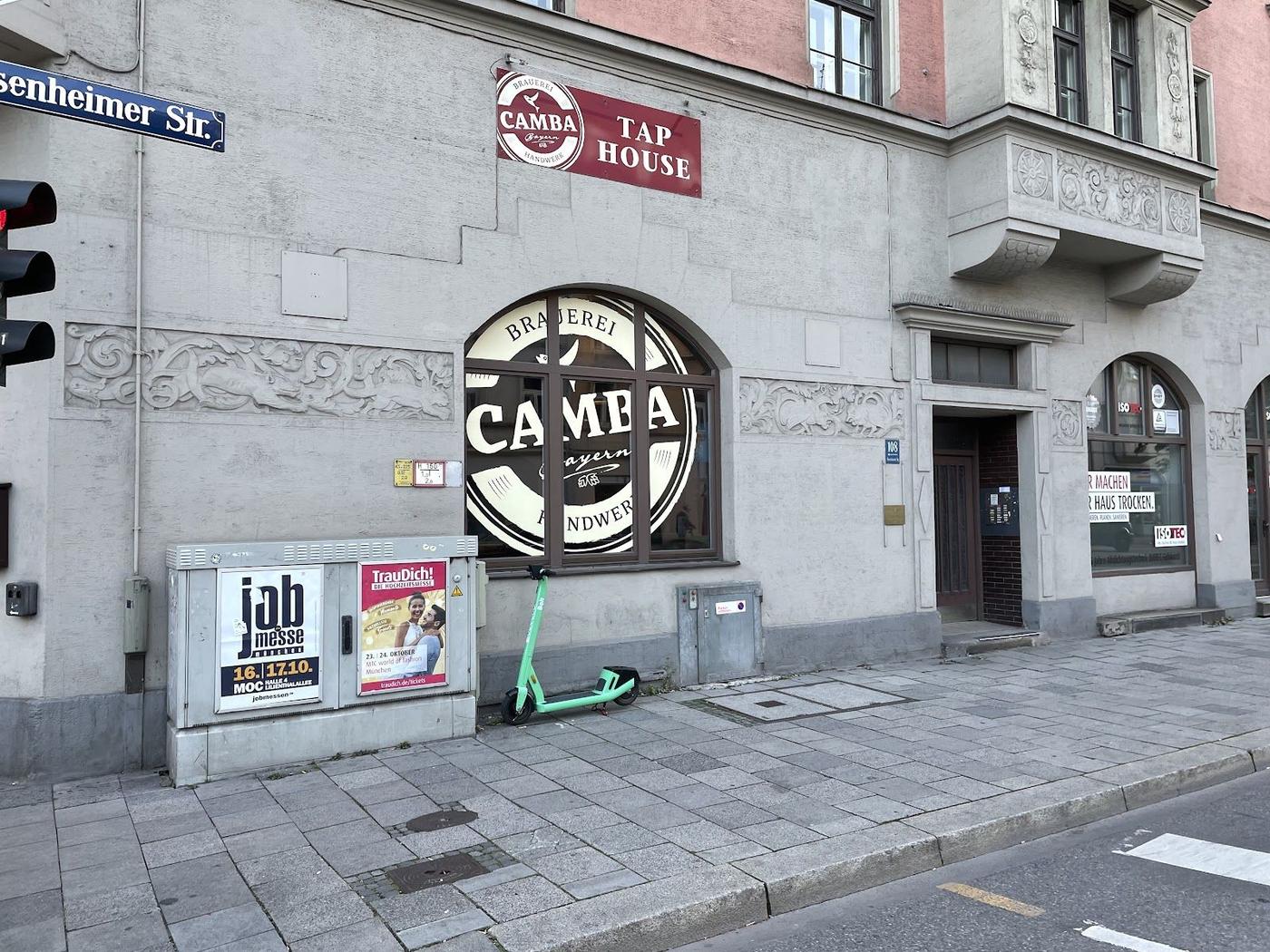
The medieval core is where Munich's brewing establishment lives, and it makes no apology for that. Andechser am Dom sits on Frauenplatz in the shadow of the Frauenkirche and pours beer from the Andechs monastery brewery, a rare non-big-six tap this close to Marienplatz. A few steps away on Neuhauser Strasse, the Augustiner Stammhaus occupies the building that housed the Augustiner brewery itself from 1817 to 1884, behind one of the city's last surviving Jugendstil frontages.
South of Marienplatz, the beer garden at the Viktualienmarkt rotates its taps between the six Munich breweries, which makes it the fastest comparative tasting in town. The S-Bahn trunk line and the U3 and U6 all stop at Marienplatz, so no district is easier to reach or to leave.
Walk west past the Hauptbahnhof and you reach the Augustiner-Keller on Arnulfstrasse, a beer garden that began life in 1808 on the site of a former gravel quarry. Around 5,000 people can sit beneath its hundred-plus chestnut trees, and the Edelstoff is drawn from wooden casks rather than steel kegs. Hackerbrücke S-Bahn station is a short walk away, which matters more at midnight than it does at six.
This is the closest Munich gets to a conventional craft district. TrueBrew runs its brewery in Isarvorstadt, one of the newer operations happy to work outside the purity law's borders, while the Paulaner Brauhaus at Kapuzinerplatz takes the opposite line and brews small-batch beers on an in-house system within sight of the tables. Between them sits the whole Munich argument in about a kilometre.
The Glockenbachviertel proper, running down towards the Isar, is the city's densest bar quarter and the natural place to finish a night. Fraunhoferstrasse U-Bahn drops you in the middle of it.
Giesing is a working district south of the centre and the home turf of Giesinger Bräu, which started in 2006 in an empty double garage at Birkenau 5. Its brewhouse and pub on Martin-Luther-Strasse have occupied a converted electrical substation since 2012, and the famous 150-metre well that won the firm official Munich brewery status in 2019 was sunk for its second plant in the city's north. Silberhornstrasse U-Bahn is the nearest stop, and the detour is the single best way to understand what new Munich beer tastes like.
Across the river, Haidhausen keeps its old village layout and a comfortable distance from the tourist core. Hopfenhäcker brews here under Werner Schürgraf, part of the small wave of Munich producers using ingredients the Reinheitsgebot never sanctioned. Rosenheimer Platz S-Bahn and Ostbahnhof both put you within walking range, and the quarter suits a slow evening better than a loud one.
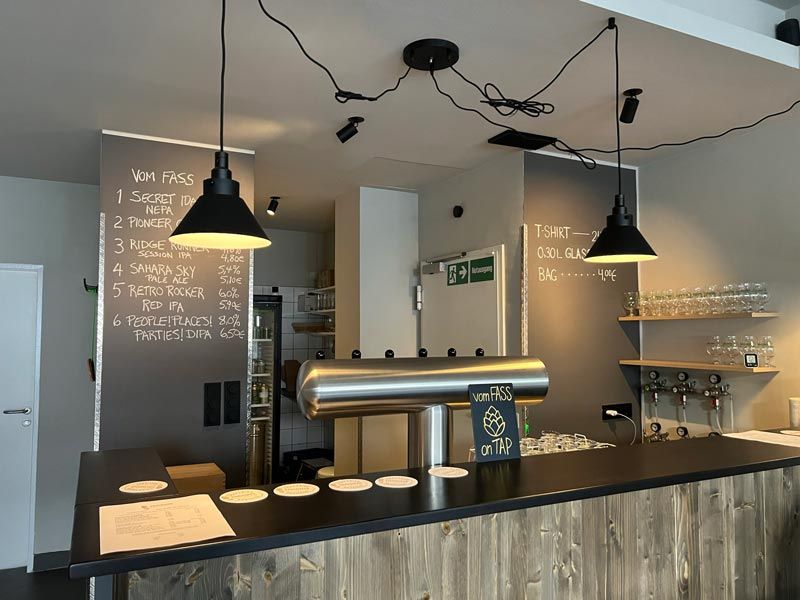
Judge a Munich beer bar by different rules than one in Berlin or Bristol. This is a lager city, so the first test is the house helles: it should arrive fresh, properly poured and moving fast enough through the cellar that staleness is impossible. A bar that cannot get a pale lager right has nothing useful to say about a hazy IPA.
The second test is dispense. The benchmark remains Augustiner Edelstoff drawn from a wooden cask, the way the Augustiner-Keller still serves it, and any bar claiming craft credentials should treat its own lines with the same seriousness. Watch the pour: a good one takes time and produces a dense, stable head.
The third test is range with a purpose. Stocking beyond the big six is genuinely difficult in a city of tied houses, so a fridge holding Giesinger, Tilmans or Hopfenhäcker signals real intent rather than fashion. Brewing on site, as the Paulaner Brauhaus does at Kapuzinerplatz, counts for even more.
Finally, character. The best rooms here are brewery halls, market gardens and cellar bars with a century of use in the floorboards, and the newer places earn their spot by conviction rather than decor.
Learn the beer garden rules before you sit down. An 1812 decree under King Maximilian I allowed the gardens to serve drinks but not to sell food, and the custom survives: in self-service areas you may bring your own picnic, provided you buy your beer on site. Skip any table marked as a Stammtisch, and expect to share benches with strangers.
Respect the Mass. Beer comes in one-litre mugs, a full one weighs over two kilos, and the traditional gardens ring a closing bell at 10:30pm sharp. Pace accordingly.
Seasons change the map. Gardens run on fair weather from spring to early autumn, while the brewery halls, brewpubs and cellar bars carry the winter. During Oktoberfest, from late September into early October, only the six big Munich breweries pour in the main festival tents, so treat the Wiesn as its own event and drink craft beer elsewhere in the city that week.
Book where booking exists. Brewery restaurants such as the halls in the Altstadt take reservations and need them on weekends, while beer garden self-service sections are first come, first seated. The U-Bahn and S-Bahn cover every district on this page, and every ranked venue sits within a short walk of a station, so leave the car at home.
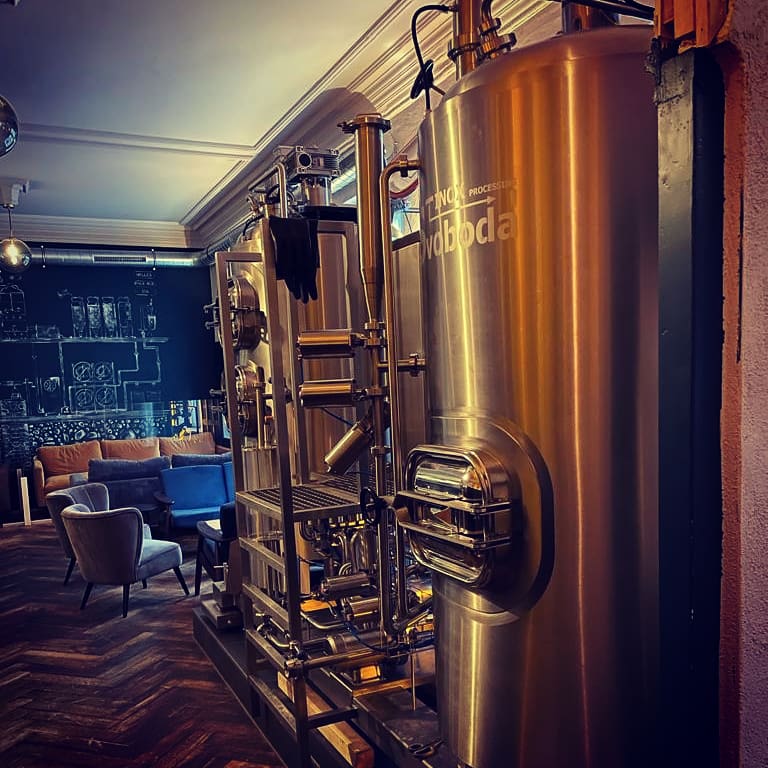
Munich is not a craft beer city in the Berlin sense, and it is better for it. The big six set a floor for quality that most craft capitals never reach, and the small brewers who broke in anyway, Giesinger above all, had to be genuinely good rather than merely new.
Our advice: spend one evening with the establishment, cask Edelstoff under the Augustiner-Keller chestnuts or a monastery beer at the Dom, and the next with the challengers in Giesing and Haidhausen. Drink both sides of the argument. That contrast, not any single bar, is the thing worth travelling for.
Good to know
It depends which Munich you are standing in. The Altstadt around Marienplatz covers the classics, from Andechs monastery beer at the Dom to Augustiner poured on its old brewery site. Isarvorstadt and the Glockenbachviertel hold the newer brewing operations, Giesing has Giesinger Bräu's brewhouse, and Haidhausen hides Hopfenhäcker.
For a ranked list built around your location, use our craft beer bars near me finder and work outward from the nearest station.
Isarvorstadt into the Glockenbachviertel gives you the most ground per hour. Start at the Paulaner Brauhaus on Kapuzinerplatz for beer brewed in-house, drift towards the bar streets around Fraunhoferstrasse, and finish near the Isar. If you want tradition instead, the Altstadt works as a compact crawl between Frauenplatz, Neuhauser Strasse and the Viktualienmarkt beer garden, with its rotating taps from all six Munich breweries.
Our full Munich guide maps both routes.
Two names frame the whole city. Augustiner, founded in 1328, is Munich's oldest brewery and the last big one still independent, and its Edelstoff from a wooden cask is the local benchmark. Giesinger Bräu is the counterweight, a firm that started in a Giesing garage in 2006 and drilled a 150-metre well to earn recognition as the city's seventh brewery.
Beyond those, look for Tilmans Biere and Hopfenhäcker in good fridges, alongside the other craft beer standards.
Helles first: the pale, bottom-fermented lager is the city's default order and its hardest style to fake, since any flaw shows. Weissbier is the second pillar, a cloudy wheat beer with banana and clove character that Bavarian brewers have owned for centuries. Dunkel, the malty dark lager, predates them both and remains the most underrated order in town.
The craft generation builds on this base, so expect sharp modern takes on all three before you expect a pastry stout.
Beer gardens fill on any warm evening from May to September, especially weekends, and their self-service sections take no bookings, so arrive early or embrace bench-sharing. Brewery halls and restaurants in the Altstadt do take reservations and need them on Friday and Saturday nights.
The crunch is Oktoberfest, late September into early October, when the whole city runs hot. Bars away from the festival grounds, in Giesing or Haidhausen, are your calmest option that fortnight.
Yes, and it is the defining rule of the whole institution. An 1812 royal decree allowed beer gardens to serve drinks but not sell food, so locals brought their own, and the right survives to this day in every traditional garden's self-service area. Pack bread, cheese, radishes or a whole spread, claim a bare table, and buy your Mass from the counter.
Tables with cloths or waiter service are the exception, where the kitchen expects your order.
Looking beyond Munich? See our guide to the best craft beer bars worldwide, or compare craft beer bars city by city. Or find craft beer bars near you.